
All posts in Sba loans

SBA Loans Houston vs. Same-Day Business Funding

For your Houston business, when is a loan offer in the next week actually more valuable than the financing you’ll likely be responsible for next year? That’s the challenge in considering SBA loans Houston versus same day business funding. Houston area business owners have the choice of working with SBA lenders, local resource partners, and other forms of commercial financing. While a Merchant cash advance may be faster, an SBA-backed loan can be structured to meet the business’s needs for working capital, equipment, real estate finance, an acquisition, or refinancing. The overall package and what your business can afford after the financing is complete will ultimately determine the best choice.



SBA Financing Options for Houston Businesses

The SBA Houston District Office works with communities and small businesses in 32 counties in Southeast Texas to provide access to resources like funding, counseling and advisory, lending, and partnering institutions. Building these partnerships is important because, in general, the SBA does not lend funds through the 7(a) Loan Program to small businesses. Instead, SBA provides a partial guarantee to a lending institution to extend funding to a business.

SBA 7(a) loans can be used to finance working capital, business purchases of machinery and equipment, owner-occupied real estate, changes in ownership, and eligible business debt refinancing. The maximum individual 7(a) loan amount is still $5 million. However, if the business meets SBA’s eligibility criteria, the business can finance more with SBA 7(a) loans combined with SBA 504 loans.

Most term loans under the 7(a) Loan Program use a fixed monthly agreement for the principal and interest payments. A term loan may be a good option for businesses that need a predictable payment schedule to replace the cash flow gap created by sales less expenses.

Finding SBA Lenders in Houston

Business owners hunting for SBA lenders in Houston do not need to check with one bank or one branch. Houston District has participants’ information on local lenders, and SBA’s Lender Match helps connect business owners with potential SBA-backed lenders depending on their financing requirements.

The Houston District engages in lender-matching events. In August 2026, one of the SBA-supported events in The Woodlands helped bring lenders together along with existing and new business owners for funding discussions. Easing access to business funding helps owners understand that the SBA financing program is a network of various lenders and not one lender with one set of underwriting requirements.

Owners should shop around and check with many lenders if possible. Certain lenders have different approval, document, pricing, collateral, and underwriting requirements. A declined loan by one lender does not mean other SBA lenders will also decline. Eligibility criteria are, however, still the same for all lenders.

SBA Financing vs. Same-Day MCA Funding

Same-day funding attracts business owners who have a time-sensitive situation. A same-day funding approval occurs rapidly to address the food truck people’s cash flow needs when a supplier requires a deposit or payroll funds are needed. Of course, same-day funding is not the actual mechanism to receive funds; it could be a short-term loan, line, advance, or other business financing.

An MCAdvance is a cash advance based on future revenue or receivables and uses recent deposits as underwriting support. The FTC has characterized MCAs as high-cost short-term financing, and collections happen on a daily or frequent basis, which can compromise business cash flows.

SBA financing is a more formal process; therefore, the underwriting and documentation needed for an SBA loan may take longer. That said, SBA financing can provide a loan amount, rate, and term which may be more favorable to a business owner in the Houston area. A business owner should consider the cost of waiting versus the cost of funding when evaluating funding alternatives and not assume same-day funding equates to best funding.



What Houston Business Owners Should Compare

First, consider the use of funds. Different needs will determine preferences for working capital versus acquisitions or equipment versus commercial property financing. Refinancing or a short-term cash need are other options. The financing solution should be appropriate to the need, rather than the search result that displays an advertising financing company first.

Compare net proceeds after fees, rate or factor, the true annualized percentage rate or cost, total fees, collateral or guarantee requirements, the expected cash balance after each payment, payment frequency, term, and the cash cycle to determine the best financing option. Also model slow and average months if the business is seasonal or project-based.

Houston’s economy consists of energy, construction, logistics, healthcare, professional services, retail, and hospitality. These all have varying cash cycles. The cash cycling needs of a logistics company waiting on payment of invoices will not be the same as a restaurant receiving payment every day from card transactions or a contractor waiting on draws.

When Longer-Term Financing Makes Sense

Long-term financing is warranted when value will take a long time to accrue. Examples of this include equipment, real estate, acquisitions, and major renovations and expansions. Since value takes a long time to accrue, the financing should have a long payment period as well to allow the value to be realized.

Money Man 4 Business has several financing program options, including some SBA programs and term loans as well as options for debt refinancing. Some of these programs have published terms for monthly payments with an option for longer payment terms of between 1 and 25 years, depending upon specific program underwriting criteria. The company publishes these programs with an option for CFO-level financing counsel.

When deciding whether you should consider Houston financing, consider whether your operating account is already stressed with short-term obligations. New financing, though, is worth considering as long as your business will be stronger after you add the financing payment.

How Money Man 4 Business Fits Into the Houston Comparison

Money Man 4 Business offers Houston owners a way to compare short-term and long term financing without starting with one lender’s offering. The company’s offerings include SBA programs, term loans, lines of credit, working capital financing, equipment loans, and debt refinancing. This is a broader offering than many competitors. This is useful because Houston businesses have varying financing needs across different industries such as construction, logistics, medical, retail, and services.

Some Money Man 4 Business programs offer financing with monthly payments that have terms from 1 to 25 years. This is useful for short-term financing offers to see what long-term financing would be like to help determine the value of financing for equipment, expansion, or debt refinancing.

The company states that their clients receive CFO-level advice. For the Houston businesses that have many obligations, the analysis may help determine if there is value to cash flow improvement and new funding.

Houston owners should remember that local access does not eliminate underwriting. Participating lenders still evaluate eligibility, creditworthiness, ability to pay, and what they are asking for.

Preparing what you need to explain in detail why you need the funds and helping them understand why you need the funds and the value of your business is the most productive way to converse with lenders. This may help the owner receive more realistic offers instead of taking the first financing offer.

Frequently Asked Questions

Does the SBA Houston District lend money directly?
Generally, no. SBA 7(a) loans are made through participating lenders. The district office can help businesses understand programs and connect with lenders and resource partners.

How can I find sba lenders houston?
The SBA Houston District publishes local lender information, and SBA Lender Match can connect borrowers with participating lenders based on financing needs.

Is Same day business funding always more expensive?
Not every fast product is the same, but speed should be evaluated separately from cost. Review the actual rate or factor, fees, term, repayment frequency, and total payback.

Use Houston Resources Before Choosing Only on Speed

Houston businesses have more than one bank and one merchant cash advance provider. Consider all of these options: SBA loans Houston, participating SBA lenders Houston, and same day business funding. Choose the best option based on the needs of the business and the cash flow after the funding is received.

Money Man 4 Business allows business owners to look into SBA loans as well as other term-based loans, lines of credit, and loan refinancing. When a business needs long-term financing, one should not solely base the decision on who can provide the funding the quickest. The long-term effects of the financing on a business should be carefully evaluated.

SBA Loan Payment Planning and Debt Service Estimates

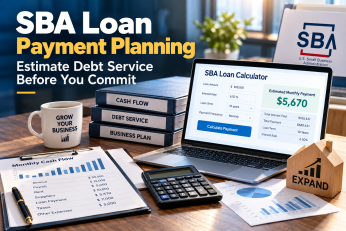
Before you ask how much SBA money you can get, have you calculated the payment the business can safely carry? Approval size is not the same as affordability. An sba loan calculator can help estimate monthly debt service. It cannot tell you whether the business can handle that payment. Owners still need to compare the estimate with payroll, rent, taxes, existing debt, and slower sales months. SBA loan rates may also be fixed or variable depending on the program and lender. A good payment plan uses realistic numbers and leaves room for the unexpected. SBA loan monthly payments should fit both normal and weak months. SBA loans are safer to compare when the same assumptions are used.

Start With the Proposed Loan Structure

A payment estimate needs four basic inputs. Start with the amount borrowed, interest rate, term, and payment frequency. Most SBA 7(a) term loans are repaid monthly. Fixed-rate loans keep the same rate. Variable-rate loans can change when the underlying rate changes. That can change the payment. SBA 504 financing has a different structure and is tied to fixed-asset projects. Do not use one calculator for every product without checking its assumptions. Use the lender’s current quote when possible. Internet averages can be outdated. Also include known fees outside the payment when you compare total cost.

Keep the estimate conservative from the beginning. If the lender gives a rate range, use the higher end for planning. If the final rate is lower, the business gains extra room. Planning with the lowest possible rate does the opposite. It creates a forecast that may fail as soon as the final terms arrive.

Write the assumptions next to the estimate. That way, you can update the payment quickly when the lender changes a term.

Use a Payment Estimate as a Planning Tool

An sba loan calculator is useful because it turns a large loan amount into a monthly number. That makes the debt easier to test. Change the term and see what happens. Change the rate and run it again. Try a smaller loan amount. The calculator can show how those choices affect the payment. It cannot confirm approval. It also cannot show every fee, covenant, or collateral requirement. Treat the result as a planning estimate. Then ask the lender for the exact terms. The goal is not to find the lowest possible payment. The goal is to find a payment that supports the business without creating unnecessary long-term cost.

Also separate principal and interest from other costs. Some fees are paid at closing and may not appear in the monthly payment. Others can be financed. The calculator may not capture them. Track both the monthly obligation and the total cash needed to close. A loan can have an affordable payment but still require more upfront cash than the business can spare.

Keep closing cash separate from monthly debt service. Both affect affordability, but they create pressure at different times.

Add the Payment to Real Operating Cash Flow

Put the estimated payment into the company’s monthly cash-flow plan. Include payroll, rent, taxes, insurance, suppliers, and current debt. Do not forget owner compensation. Then look at what cash remains. A payment may seem small next to annual revenue. It can still be difficult in a weak month. Review the timing of customer payments too. A company that gets paid every 30 or 60 days needs more cushion than one with daily sales. The loan should fit the way cash actually moves. Monthly payments are easier to plan for, but they still need to be affordable.

Seasonality deserves special attention. A monthly payment is fixed on the calendar even when sales move up and down. Use the weakest normal quarter in the model. If the company has a predictable busy season, do not let that strong period hide pressure in the slow season. The payment needs to work across the full year.

If cash flow is seasonal, consider building extra reserves during strong months instead of assuming every month will look the same.

Stress-Test Rate and Revenue Changes

A strong plan should survive a reasonable setback. Reduce expected sales by 10% or 15%. Delay a large customer payment. Add an equipment repair. If the loan has a variable rate, test a higher rate as well. Then check the cash balance again. If one modest change creates a shortfall, the financing may be too large. The owner could borrow less, extend the term if available, or change the project. This is where sba loan rates become more than a headline number. The rate matters because it affects the monthly cash the business must produce. Stress testing shows how much room the company really has. Run the sba loan calculator with several rate cases. Then compare sba loan rates against the same term and amount.

Existing debt should be included at the same time. Owners sometimes calculate the new loan by itself. That misses the real burden. Add credit lines, equipment notes, mortgages, and other scheduled obligations. If the new project replaces existing debt, remove only the payments that will actually disappear after closing.

Run the model with all existing payments. New debt should be judged against the full debt load, not by itself.

How Money Man 4 Business Turns the Payment Into a Financing Decision

Money Man 4 Business can help owners look past the approval amount. MM4B can compare monthly payments, terms, and cash-flow effects across SBA and other options. Clients may work with a CFO with 34+ years of experience. That can help when a business is deciding how much debt to take on. The safest answer may be a smaller loan or a different structure. It may also be better to delay part of the project. Financing should leave the business able to operate during an average month and a difficult one. That is the standard that matters after closing. Before accepting sba loans, test the payment against a slower sales month. SBA loan monthly payments should still leave room for payroll and taxes.

Use the estimate to set a borrowing limit before negotiations begin. That limit can prevent a larger approval from becoming a larger problem. If the business can safely support a certain monthly payment, work backward to the loan size and term. This keeps the financing decision tied to cash flow rather than emotion.

A safe borrowing limit gives the owner discipline during negotiations and reduces the risk of taking more debt than the project needs.

Revisit the payment estimate before signing the final documents. Compare it with the original plan and the latest business results. If the payment has moved materially, update the cash-flow forecast. The decision should be based on the final terms, not the early estimate that started the application.

Frequently Asked Questions

Is an SBA loan calculator exact?

No. It provides an estimate based on the inputs. Final payments depend on the lender, exact rate, term, fees, and loan structure.

Can SBA rates change after closing?

Variable-rate SBA loans can change when the underlying rate changes. Fixed-rate loans keep the stated rate.

How much payment cushion should a business keep?

There is no single rule for every company. The business should keep enough room for slower sales, delayed receivables, and unexpected operating costs.

Calculate the Payment Before You Fall in Love With the Loan Amount

The largest available loan is not always the safest loan. Estimate the payment first. Then test it against real cash flow and a weaker scenario. Money Man 4 Business can help owners compare SBA payment structures and other monthly-payment options. The right amount is the one the business can carry while still paying employees, suppliers, taxes, and normal operating costs.

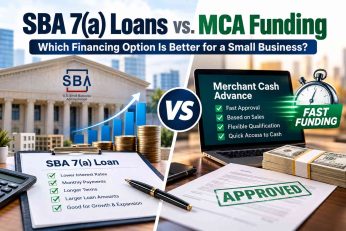
SBA 7(a) Loans vs. MCA Funding for Small Business

Is fast cash really a win when payment starts eating into your cash flow before the new investment starts making money? This question is important when an owner is considering an sba 7(a) loan versus an application for MCA funding. Both can fund a business, but they’re meant for different things. One focuses on longer-term, structured payback. The other focuses on faster payback with recent business revenue. The decision depends on the purpose of the money, the timing of the need, and what the business can afford as a payback for the funds.


Why Fast Funding Is So Tempting

There are times when an owner has no other choice than to resort to quick business funding. The deadline for payroll is approaching. A critical piece of machinery suddenly breaks. A supplier has a limited time offer on Friday. A client delays a large payment. That is when the owner is left with no other choice than to use Fast business funding.

It is understandable to see the appeal for owners in this position to do a merchant cash advance. The advance is typically based on a company’s sales amount and can be approved in less time than a traditional bank loan. The speed cash advance option is also attractive to anyone who has been turned away from traditional financing.

The problem owners are faced with is what happens after the advance is approved. If the funding requires daily or weekly collections, it could potentially create a cash flow problem after the funding period is over.

What an SBA 7(a) Loan Is Designed to Do

The SBA 7(a) Program is the Small Business Administration’s (SBA) primary loan program. The SBA does not provide borrowed funds directly. Lenders that participate in the program make qualifying loans and receive an SBA guarantee which provides the lender a portion of the risk.

The sba 7(a) loan can be used for several purposes, such as working capital, purchasing, furniture, fixture, supplies, real estate, business acquisition, and certain forms of debt refinancing. The maximum individual 7(a) loan is $5 million. The actual approval amount will depend on the lender, the borrower’s ability to repay, and the details of the transaction and the program’s eligibility.

One of the biggest practical differences is the structure of the loan repayment. Most terms 7(a) loans are structured to have the principal and interest drawn from the cash flow of the business, and are paid monthly.owners that have a monthly budget, the model of sba loan monthly payments along with budget items, such as rent, payroll, taxes, insurance, and the other fixed expenses of the business, is a relatively easy structure to budget for the business.

Speed vs. Sustainability

SBA financing requires more information from applicants because lenders need to see that the business can handle the debt. Examples of information required are tax returns, projections, financial statements, debt schedules, ownership information, and plans for how the funds will be used. This is more involved than many fast funding forms.

However, the length of the form does not negatively impact the process. In some cases, the forms actually encourage the applicant(s) to reflect on the business decision. For example, the focus should not be on the time it takes to receive the funds, but whether the business can support the cost of the financing.

Evaluating the trade-off of the pros and cons of speed is still important. Business owners are usually interested in funding that meets their needs quickly, and for a variety of reasons, evaluating the pros and cons of speed is important. The most affordable funding that is the fastest also only makes sense economically during an emergency.

Just because an application process is fast does not mean owners should rush to Apply for MCA financing. There are several key terms to consider, including total cost of the financing, true APR or annualized cost where available, payment frequency, and how long funds are collected prior to payment during slow sales.

What If the Business Already Has Expensive Debt?

This is where the conversation usually changes. The owner is not starting from zero. There could be two MCAs, credit card debt, equipment debt, or a short-term loan already in the background. Fast business funding on top of these obligations could give cash today, but definitely make tomorrow’s payment harder.

Refinancing and consolidating debt can be done using some SBA and longer-term financing programs. These should not be used for moving debt to a more convenient location. The point is to have better structure with fewer payments, longer payment terms, and more predictable and consistent monthly cash flow.

Money Man 4 Business focuses on consolidation and refinancing solutions for businesses. The company says qualifying restructures can lead to a significant reduction in interest costs and fees, often to the tune of two-thirds or more of the total cost and fees of high-cost eligible debt. The actual results depend on underwriting and the debt being replaced, but it is worthwhile to do the math to check the savings before accepting a refinance.

How Money Man 4 Business Helps Owners Compare the Options

An application for financing should not start with the question, “Which product can approve me fastest?” The correct starting question should be, “What problem am I actually trying to solve?” Money Man 4 Business offers access to several types of financing options, including SBA loans, longer-term working capital loans, lines of credit, and term refinancing. Money Man 4 Business offers term loans that can extend from 1-25 years, pending the program and qualification, and provides cash flow management through a monthly payment structure.

The company also provides direct financial guidance. Money Man 4 Business states that their clients receive financial guidance from a CFO with over 34 years of experience, helping business owners evaluate financing. For an owner with multiple debts, that kind of review is useful to help determine if the best answer is new financing, consolidation, refinancing, or a smaller financing amount.

When an SBA Loan May Make More Sense

An SBA-backed loan is best for planned, long-term requirements, like purchasing equipment, buying a business, expanding a location, refinancing eligible debt, or creating a larger working capital cushion. Longer-term financing allows for the value appreciation of the financed asset before the debt is completely amortized.

An MCA may be considered for an urgent, short-term financing need with a clear potential return, but its cost and collection timeline should be understood first. Because MCAs can be high-cost and may collect daily or weekly, they should be compared carefully with longer-term options. Neither should an sba 7(a) loan be thought of automatically as affordable. The numbers still have to work out.

The right solution to financing is the one that meets the financing requirement without keeping the operating account strained.

Frequently Asked Questions

How much can an SBA 7(a) loan provide?
The SBA states that the maximum individual 7(a) loan amount is $5 million. Actual approval depends on eligibility, lender underwriting, the purpose of the financing, and repayment ability.

Does SBA require one universal minimum credit score?
No single minimum score applies to every 7(a) loan. Lenders apply underwriting standards within SBA program requirements.

Is an MCA always faster?
MCAs are commonly marketed for speed, but timing varies by provider and file. SBA financing generally requires more documentation and underwriting, so it often takes longer.

Look Beyond the Funding Date

One day is all you need to receive financing, but the impact of financing decisions can last a lifetime for your business. Compare the length of money inflow from an SBA loan against the money inflow from Fast business funding. Consider which structure will allow you to maintain operational cash flow for an average and a challenging month.

Money Man 4 Business provides tools to anybody wanting to compare SBA financing and other term programs to refinance debt and consolidate existing financing. If the business has an expensive, short-term debt, look into a longer-term debt refinance. It may be more beneficial than a new financing advance. The goal of any financing should be to maintain, and even improve, the cash flow of your business.

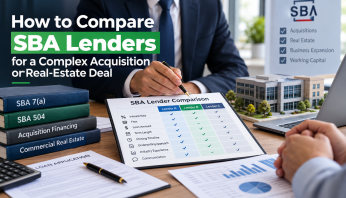
How to Compare SBA Lenders for a Complex Business Deal

If two lenders work within the same SBA program, why can the financing experience still be very different? SBA sets program rules, but lenders still make credit decisions. They may prefer different industries, deal sizes, or transaction types. That matters in acquisitions and real-estate projects. A search for an sba lender near me is only a starting point. The closest lender may not be the best fit for a complex deal. Owners should compare how each lender handles the transaction, what information they need, and how clearly they explain the process. A search for an sba lender near me may produce many names. It does not show which team fits a complex deal.


Lender Appetite Matters

SBA lenders do not all approach deals the same way. One lender may be comfortable with acquisitions. Another may prefer owner-occupied real estate. Some may have more experience with a certain industry or loan size. This does not change SBA rules. It changes how the lender evaluates risk within those rules. Ask about recent deals that look like yours. Find out whether the lender has experience with ownership changes, specialized collateral, or complex entities. For 504 projects, remember that the SBA program works through Certified Development Companies. The structure may involve both a CDC and another lender. Choosing people who understand the transaction can reduce confusion and delays.

Start by describing the deal in one page. Include purchase price, property value, use of funds, borrower background, and timing. Send the same summary to each lender. That makes responses easier to compare. If one lender is quoting a different structure, you can see why. It also reduces the chance that inconsistent information creates confusion later.

A lender that understands the industry may also ask better questions and spot issues before they become closing delays.

Compare More Than the Quoted Rate

The quoted rate matters, but it is not the whole deal. Compare fees, cash required, collateral expectations, and closing costs. Ask what documents are needed and when. Review whether the lender expects fixed or variable pricing. Also ask how long the process usually takes for a file like yours. Do not treat an early quote as final. Some terms can change after underwriting and appraisal work. Write down what is firm and what is only an estimate. The best sba lenders explain these differences clearly. They also answer questions before the borrower spends money on third-party reports. A clear process is valuable in a complex transaction. The best sba lenders explain their process before asking for a full package. They also explain current sba loan requirements clearly.

Ask about third-party costs before ordering anything. Appraisals, environmental reports, business valuations, and legal work can cost money even if the loan does not close. Find out which reports are required and when they become nonrefundable. A lender should explain these steps clearly. The owner should know what money is at risk during the process.

Request a written estimate of major fees. It is easier to compare offers when costs are shown in the same format.

Ask How the Lender Handles Complexity

Complex deals create more points of failure. An acquisition may involve a seller note, landlord consent, licensing, or ownership changes. A real-estate project may need appraisals, environmental work, construction estimates, or entity documents. Ask who manages these pieces. Find out how the lender handles questions from attorneys, brokers, and sellers. Ask whether one person owns the file or whether it moves between departments. Good communication can matter as much as speed. A lender that understands the deal can identify issues early. A lender that does not may discover them near closing. That can cost time and money. Compare sba loans on structure, not only rate. Ask how the lender handles appraisals, exceptions, and closing conditions.

Speed should be defined carefully. A lender may say the loan can close quickly, but complex deals depend on outside parties. The seller, landlord, appraiser, CDC, attorney, or insurer may slow the timeline. Ask what the lender controls and what it does not. A realistic closing schedule is more useful than an optimistic promise.

For a complex deal, ask who has authority to answer policy questions. Repeated handoffs can slow decisions and create mixed messages.

Build a Lender Comparison Sheet

Use the same questions for every lender. Record the proposed amount, rate type, term, fees, cash required, collateral, and expected monthly payment. Add document requirements and estimated closing steps. Also note communication quality. Did the lender answer direct questions? Did the explanation change from one call to the next? SBA’s Lender Match tool can connect owners with interested lenders, but it does not guarantee a loan. It is still the borrower’s job to compare offers. A simple comparison sheet makes the differences easier to see. It also prevents a low rate from hiding a poor fit elsewhere in the deal.

Compare responsiveness during the early stage. Complex transactions create questions. If basic questions go unanswered before application, communication may not improve later. Keep notes from calls and emails. Good communication is not a guarantee of approval, but it can reduce preventable delays and help the borrower make decisions with current information.

Include the lender’s expected timeline on the sheet. A lower rate may not help if the process cannot meet the contract deadline.

How Money Man 4 Business Can Help Owners Navigate Lender Options

Money Man 4 Business can help owners review lender and program fit. The focus should be the whole transaction. That includes the monthly payment, cash required, timing, and working capital after closing. MM4B can help compare SBA and other structures. Clients may work with a CFO with 34+ years of experience. That can be useful when several lenders present different approaches. No adviser can guarantee SBA approval. The value is in organizing the deal and comparing the real trade-offs before the owner commits to one path. The best sba lenders should make the next steps clear. Review sba loan requirements before choosing between competing sba loans.

The final choice should consider fit, not loyalty. A bank that handled your checking account for years may still be the wrong lender for a specialized acquisition. A distant lender may have more experience with the deal. Location can matter, but relevant experience often matters more. Choose the lender that understands the transaction and can explain the path clearly.

MM4B can also help the owner prepare questions before lender calls, which makes each comparison more useful.

Before making the final choice, ask each lender to explain the next three steps in plain language. You should know what is due, who reviews it, and what can still change. That simple test often shows which lender has the clearest process for a complicated transaction.

Frequently Asked Questions

Do all SBA lenders use the same underwriting?

No. SBA sets program rules, but participating lenders still apply their own credit policies and risk standards within those rules.

Should I apply to several lenders?

Comparing more than one lender can be useful. Avoid submitting many full applications without understanding credit pulls, costs, and documentation demands.

What makes one SBA lender better for a complex deal?

Experience with the transaction type, clear communication, realistic terms, and a strong closing process often matter as much as the headline rate.

Choose the Lender That Understands the Deal

A complex SBA transaction needs more than a competitive quote. It needs a lender that understands the project and communicates clearly. Compare the whole process, not just the rate. Money Man 4 Business can help owners review lender options, monthly payments, and cash-flow effects. The best fit is the lender and structure that can carry the deal from application through closing without losing sight of the operating business.

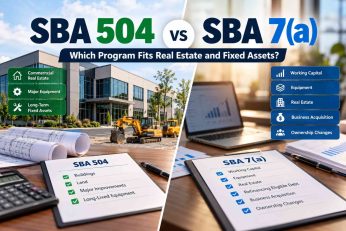
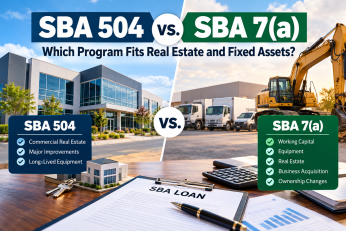
SBA 504 vs. SBA 7(a) for Real Estate and Fixed Assets

Two SBA programs can finance growth, but which one matches the asset you are actually buying? That question should come before the application. SBA 504 and SBA 7(a) both support small businesses. They are built for different kinds of needs. A 504 project focuses on eligible long-term fixed assets. An sba 7a loan can cover a wider range of business uses. That may include working capital, equipment, real estate, and changes of ownership. The right choice depends on the project, cash needs, and repayment plan. It should not depend only on which program name sounds familiar. SBA loans can look similar from a distance. The details decide which program fits.


Start With the Purpose of the Funds

Write down exactly what the money will pay for. A fixed-asset project may include a building, major improvements, or long-lived machinery. A broader project may also need working capital, inventory, or acquisition funds. This difference matters because SBA programs do not allow the same uses. SBA 504 is aimed at eligible fixed assets. It cannot be used for ordinary working capital or inventory. SBA 7(a) is more flexible and can support several business purposes. That makes it useful when one transaction has several needs. Do not force a project into a program because the rate looks attractive. Start with the use of funds. Then confirm the program rules with the lender or CDC. SBA loan eligibility also changes with the use of funds and project structure.

A simple project map can make the choice clearer. Put every use of funds into one of two groups: fixed assets or broader business needs. If almost everything is real estate and long-lived equipment, 504 deserves a close look. If the project also needs working capital or an ownership change, 7(a) may offer more flexibility. The final choice still depends on eligibility and lender structure.

This first sort often saves time because it removes programs that cannot fund the full need.

Where SBA 504 Tends to Fit

SBA 504 often fits owner-occupied commercial real estate and qualifying long-lived equipment. The program is delivered through Certified Development Companies. It is designed for major fixed assets that support business growth. Current SBA guidance lists 10-, 20-, and 25-year maturity options. That can make the structure useful for assets that produce value for many years. The program is not designed for passive rental investment. It also does not cover normal working capital. For a business buying a building or large machine, that focus can be a strength. The financing stays tied to the long-term asset. The owner still needs a separate plan for operating cash and other short-term costs.

The people involved also differ. A 504 project uses a Certified Development Company as part of the process. A 7(a) loan is made by a participating lender with an SBA guarantee. That can affect documentation and closing flow. Owners should ask who is responsible for each step. A clear process reduces surprises when appraisals, insurance, or legal documents are due.

Ask the CDC how its part of the transaction fits with the lender’s part before you commit.

Where SBA 7(a) Can Be More Flexible

An sba business loan under the 7(a) program can cover a wider mix of needs. Current SBA guidance allows uses such as working capital, equipment, real estate, refinancing eligible debt, and changes of ownership. That flexibility matters when the project is not just one fixed asset. A buyer may need funds for a business acquisition and working capital. A growing company may need equipment plus extra operating cash. A 7(a) structure may fit those mixed needs better. Most 7(a) term loans are repaid monthly from business cash flow. Rates can be fixed or variable. The exact terms come from the participating lender within SBA rules. An sba 7a loan can be useful when a project needs several types of funding. An sba business loan still has to match repayment capacity.

Mixed projects need careful budgeting. A building purchase may also require inventory, hiring, or marketing. One program may not cover every cost. The owner may need a second source of funds. That is not automatically a problem, but the combined payments must be tested together. Separate approvals can still create one shared cash-flow burden.

If one program leaves a funding gap, identify that gap early and price the second source too.

Compare Cash Required, Structure, and Repayment

Do not compare the two programs by rate alone. Ask how much cash the business must bring. Review fees, collateral, term length, and monthly debt service. Also ask which costs can be included. A program can look cheaper but still require more cash than the business can safely provide. Another option may cost more but preserve working capital. Model the payment after payroll, taxes, rent, and existing debt. Use a normal sales month, not the strongest month of the year. If the business cannot support the payment during a slower period, the project is too aggressive. The program should fit both the asset and the operating cash flow.

Compare the programs using the same worksheet. List cash required, monthly payment, term, fees, and costs not covered. Then add the expected operating benefit. This removes some of the noise from program names. It also helps the owner explain the choice to partners, accountants, and lenders using one set of numbers.

Use the same forecast for both programs so the comparison stays fair and easy to explain.

How Money Man 4 Business Helps Owners Choose

Money Man 4 Business can help owners compare SBA and other financing choices. The goal is not to push every project into one program. The goal is to match the financing with the actual need. MM4B can review the use of funds, monthly payment, and cash left after closing. Clients may work with a CFO with 34+ years of experience. That can be useful when real estate, equipment, and working capital all appear in one project. SBA approval still depends on program rules and underwriting. A clear comparison helps the owner choose the structure that supports the business after the transaction closes. Compare SBA loans using the same cash-flow forecast. Review sba loan eligibility before paying major third-party costs.

Do not assume SBA financing is automatically the cheapest choice. SBA-backed loans can offer useful terms, but every transaction has costs and requirements. Conventional financing may be better in some cases. The value of an SBA program is how well it fits the project, not the label itself.

A good adviser should be willing to say when a conventional option fits better than either SBA program.


Frequently Asked Questions

Can both programs finance real estate?

Yes, eligible business-use real estate can fit either program. The better option depends on the full project and program rules.

Which program can include working capital?

SBA 7(a) can support eligible working-capital needs. SBA 504 is focused on qualifying fixed assets.

Can one business use more than one SBA program?

It can be possible. Current SBA rules allow eligible borrowers to combine 7(a) and 504 financing in some cases. Lender and SBA limits still apply.

Choose the Program After You Define the Project

SBA 504 and SBA 7(a) are not interchangeable. One is focused on fixed assets. The other can support a broader mix of needs. Define the project first. Then compare monthly payments, cash required, and long-term cash flow. Money Man 4 Business can help owners review the options and decide which structure fits the business rather than chasing a program label.

Buying an Existing Business With SBA Financing

Can the business you are buying pay for its own acquisition debt after the seller walks away? That question matters more than the asking price. SBA 7(a) financing can be used for eligible changes of ownership. The lender still needs to see a business that can repay the debt. Buyers who ask how to qualify for an sba loan should start with the target company’s cash flow. They also need a clear picture of the transaction. Good preparation does not guarantee approval. It does show whether the deal can support the new debt and the buyer’s operating plan. Many buyers ask how to qualify for an sba loan after finding a target. The better time is before signing a purchase agreement.


Start With the Target Company’s Real Cash Flow

Historical profit is useful, but it needs context. A seller may run personal expenses through the business. The seller may also take little salary. A buyer could face different wages, rent, insurance, or management costs. Adjust the historical numbers so they reflect the business after closing. Separate one-time items from normal expenses. Then look at customer concentration and seasonality. A company can show strong annual profit while having weak cash months. Lenders care about repayment capacity. Buyers should care about the same thing. The acquisition only works if the business can pay the debt and still fund daily operations. A realistic cash-flow view also helps the buyer avoid overpaying for earnings that may not continue.

Buyers should also understand where the target’s revenue comes from. A company with one large customer carries different risk from one with hundreds of small customers. Review customer concentration, recurring contracts, and recent sales trends. Ask what revenue depends directly on the seller. If important relationships may leave after closing, adjust the forecast before deciding how much debt the business can support.

The buyer should know which earnings are recurring and which came from unusual events or one large customer.

What Buyers Should Gather Before Approaching Lenders

Prepare the file before asking for financing. Buyers usually need personal and business information. The lender may also request tax returns, financial statements, ownership details, and a purchase agreement or letter of intent. The seller’s records are just as important. Organize several years of financial history when available. Include current year results and a list of existing debts. The buyer should also prepare a resume or background summary. Industry experience can help explain the transition plan. SBA loan eligibility depends on more than one document. The lender reviews the borrower, the business, and the transaction together. Missing information can slow the process and make the deal harder to evaluate. SBA loan requirements often include detailed financial records and ownership information. SBA loan eligibility also depends on the buyer and transaction.

The quality of records tells a story too. Clean books make the business easier to evaluate. Large unexplained adjustments create questions. Buyers should reconcile financial statements with tax returns and bank activity when possible. Differences may have valid reasons, but they should be explained. A lender cannot rely on numbers that the buyer cannot defend.

Create a document checklist and track who will provide each item. This prevents last-minute gaps during underwriting.

Understand the Transaction Beyond the Purchase Price

The sale price is not the only cash need. A buyer may need working capital after closing. There may be legal costs, licensing fees, inventory changes, equipment repairs, or staff costs. The seller may leave unpaid obligations that must be addressed. Build a sources-and-uses schedule for the full transaction. Show where every dollar comes from and where it will go. Keep enough cash available for the first months of ownership. A buyer who uses every available dollar at closing has little room for surprises. That can turn a profitable acquisition into a cash-flow problem. The lender will also want a clear view of how the purchase will be funded.

Plan the transition in detail. Decide how long the seller will stay, who will introduce key customers, and who holds important licenses or vendor relationships. A smooth handover can protect cash flow. A poor handover can create a drop in sales even when the underlying business is strong. The financing plan should reflect the real transition risk.

Ask the seller about upcoming bills, annual renewals, and deferred repairs. These costs become the buyer’s problem after closing.

Stress-Test the Debt After Closing

Do not assume the business will perform exactly like it did for the seller. A customer may leave. A key employee may resign. Sales may dip during the ownership change. Build a weaker-case forecast. Reduce revenue and add a few transition costs. Then include the proposed monthly loan payment. Does the business still cover payroll and suppliers? Does cash stay positive? If the answer is no, change the deal. The purchase price may need to fall. The buyer may need more cash or a different financing mix. Stress testing is not pessimism. It shows how much room the business has if the first year is harder than expected.

Working capital deserves its own line. The target may have enough cash under the seller’s ownership but need more under the buyer. Inventory might need to rise. Customers may pay more slowly. Payroll dates may fall before receivables arrive. The buyer should understand the normal cash cycle before closing, not after the first tight week.

If the downside case fails quickly, do not ignore it. Change the price, structure, or reserve before signing.

How Money Man 4 Business Can Help Package and Compare SBA Options

Money Man 4 Business can help buyers organize the financing question before closing. MM4B can review the purchase price, working-capital need, monthly payment, and existing obligations. It can also help compare SBA and other term options. Clients may work with a CFO with 34+ years of experience. That can help when the buyer needs to judge cash flow, not just approval odds. SBA rules and lender underwriting still control the final decision. The goal is a structure that leaves the acquired business with enough cash to operate after the seller exits. An sba business loan should support the purchase and post-close cash needs. Review sba loan requirements before the lender orders costly third-party work.

Finally, set a limit on how much personal cash you are willing to add after closing. Buyers often assume they can contribute more if needed. That can hide a weak deal structure. A better plan gives the business enough liquidity from the start and keeps emergency personal funding as a last resort.

The financing package should tell one clear story: what is being bought, how it earns, and how the debt gets paid.


Frequently Asked Questions

Can SBA financing be used to buy an existing business?

Yes. Current SBA 7(a) rules allow eligible changes of ownership, subject to lender underwriting and program requirements.

What financial records will lenders want from the seller?

Expect requests for tax returns, financial statements, current results, debt information, and other records needed to verify the business cash flow.

How much cash should remain after closing?

There is no single amount for every deal. The buyer should keep enough liquidity for payroll, suppliers, taxes, and expected transition costs.

Buy the Cash Flow, Not Just the Business Name

A good acquisition can fail if the financing is too heavy. Start with the target company’s real cash flow. Build the full transaction budget and keep post-close reserves. Then test the debt under a weaker scenario. Money Man 4 Business can help buyers compare financing structures and monthly payments. The right deal should leave the new owner with a business that can still operate after closing. The right sba business loan should leave enough cash to operate after closing.

SBA 504 vs. SBA 7(a) for Real Estate and Fixed Assets

Two SBA programs can finance growth, but which one matches the asset you are actually buying? That question should come before the application. SBA 504 and SBA 7(a) both support small businesses. They are built for different kinds of needs. A 504 project focuses on eligible long-term fixed assets. An sba 7a loan can cover a wider range of business uses. That may include working capital, equipment, real estate, and changes of ownership. The right choice depends on the project, cash needs, and repayment plan. It should not depend only on which program name sounds familiar. SBA loans can look similar from a distance. The details decide which program fits.


Start With the Purpose of the Funds

Write down exactly what the money will pay for. A fixed-asset project may include a building, major improvements, or long-lived machinery. A broader project may also need working capital, inventory, or acquisition funds. This difference matters because SBA programs do not allow the same uses. SBA 504 is aimed at eligible fixed assets. It cannot be used for ordinary working capital or inventory. SBA 7(a) is more flexible and can support several business purposes. That makes it useful when one transaction has several needs. Do not force a project into a program because the rate looks attractive. Start with the use of funds. Then confirm the program rules with the lender or CDC. SBA loan eligibility also changes with the use of funds and project structure.

A simple project map can make the choice clearer. Put every use of funds into one of two groups: fixed assets or broader business needs. If almost everything is real estate and long-lived equipment, 504 deserves a close look. If the project also needs working capital or an ownership change, 7(a) may offer more flexibility. The final choice still depends on eligibility and lender structure.

This first sort often saves time because it removes programs that cannot fund the full need.

Where SBA 504 Tends to Fit

SBA 504 often fits owner-occupied commercial real estate and qualifying long-lived equipment. The program is delivered through Certified Development Companies. It is designed for major fixed assets that support business growth. Current SBA guidance lists 10-, 20-, and 25-year maturity options. That can make the structure useful for assets that produce value for many years. The program is not designed for passive rental investment. It also does not cover normal working capital. For a business buying a building or large machine, that focus can be a strength. The financing stays tied to the long-term asset. The owner still needs a separate plan for operating cash and other short-term costs.

The people involved also differ. A 504 project uses a Certified Development Company as part of the process. A 7(a) loan is made by a participating lender with an SBA guarantee. That can affect documentation and closing flow. Owners should ask who is responsible for each step. A clear process reduces surprises when appraisals, insurance, or legal documents are due.

Ask the CDC how its part of the transaction fits with the lender’s part before you commit.

Where SBA 7(a) Can Be More Flexible

An sba business loan under the 7(a) program can cover a wider mix of needs. Current SBA guidance allows uses such as working capital, equipment, real estate, refinancing eligible debt, and changes of ownership. That flexibility matters when the project is not just one fixed asset. A buyer may need funds for a business acquisition and working capital. A growing company may need equipment plus extra operating cash. A 7(a) structure may fit those mixed needs better. Most 7(a) term loans are repaid monthly from business cash flow. Rates can be fixed or variable. The exact terms come from the participating lender within SBA rules. An sba 7a loan can be useful when a project needs several types of funding. An sba business loan still has to match repayment capacity.

Mixed projects need careful budgeting. A building purchase may also require inventory, hiring, or marketing. One program may not cover every cost. The owner may need a second source of funds. That is not automatically a problem, but the combined payments must be tested together. Separate approvals can still create one shared cash-flow burden.

If one program leaves a funding gap, identify that gap early and price the second source too.

Compare Cash Required, Structure, and Repayment

Do not compare the two programs by rate alone. Ask how much cash the business must bring. Review fees, collateral, term length, and monthly debt service. Also ask which costs can be included. A program can look cheaper but still require more cash than the business can safely provide. Another option may cost more but preserve working capital. Model the payment after payroll, taxes, rent, and existing debt. Use a normal sales month, not the strongest month of the year. If the business cannot support the payment during a slower period, the project is too aggressive. The program should fit both the asset and the operating cash flow.

Compare the programs using the same worksheet. List cash required, monthly payment, term, fees, and costs not covered. Then add the expected operating benefit. This removes some of the noise from program names. It also helps the owner explain the choice to partners, accountants, and lenders using one set of numbers.

Use the same forecast for both programs so the comparison stays fair and easy to explain.

How Money Man 4 Business Helps Owners Choose

Money Man 4 Business can help owners compare SBA and other financing choices. The goal is not to push every project into one program. The goal is to match the financing with the actual need. MM4B can review the use of funds, monthly payment, and cash left after closing. Clients may work with a CFO with 34+ years of experience. That can be useful when real estate, equipment, and working capital all appear in one project. SBA approval still depends on program rules and underwriting. A clear comparison helps the owner choose the structure that supports the business after the transaction closes. Compare SBA loans using the same cash-flow forecast. Review sba loan eligibility before paying major third-party costs.

Do not assume SBA financing is automatically the cheapest choice. SBA-backed loans can offer useful terms, but every transaction has costs and requirements. Conventional financing may be better in some cases. The value of an SBA program is how well it fits the project, not the label itself.

A good adviser should be willing to say when a conventional option fits better than either SBA program.


Frequently Asked Questions

Can both programs finance real estate?

Yes, eligible business-use real estate can fit either program. The better option depends on the full project and program rules.

Which program can include working capital?

SBA 7(a) can support eligible working-capital needs. SBA 504 is focused on qualifying fixed assets.

Can one business use more than one SBA program?

It can be possible. Current SBA rules allow eligible borrowers to combine 7(a) and 504 financing in some cases. Lender and SBA limits still apply.

Choose the Program After You Define the Project

SBA 504 and SBA 7(a) are not interchangeable. One is focused on fixed assets. The other can support a broader mix of needs. Define the project first. Then compare monthly payments, cash required, and long-term cash flow. Money Man 4 Business can help owners review the options and decide which structure fits the business rather than chasing a program label.

SBA 504 Financing for Heavy Equipment and Fixed Assets

Should a machine expected to run for a decade be paid off on a schedule designed for only a few months? That mismatch can strain a healthy business. Heavy equipment often creates value over many years. The financing should give the asset time to produce that value. SBA 504 equipment financing may fit certain long-lived machinery and fixed assets. It is not meant for ordinary inventory or working capital. Owners should first confirm that the asset and project meet current SBA rules. Then they should compare the full monthly cost with the income or savings the equipment is expected to create. Equipment loans should be tested against the same project cost and expected output. Small business equipment financing should also leave room for maintenance and payroll.


Which Fixed Assets May Fit SBA 504

SBA 504 financing is designed for major fixed assets. That can include eligible long-term machinery and equipment. The program is often relevant when the asset will stay in service for years. It may suit manufacturing equipment, large production systems, or other substantial business machinery. The exact asset must meet current SBA and lender requirements. The program cannot be used for routine working capital or inventory. That matters because many equipment projects include both fixed assets and short-term operating needs. Separate those costs early. The fixed asset may fit 504 financing, while payroll or inventory may need another source. A clean budget makes the financing request easier to understand. It also helps the owner avoid using long-term debt for costs that disappear quickly.

Asset condition also matters. A machine with a long expected life should have maintenance records, service support, and available parts. Used equipment can be attractive because the price is lower. However, a cheap machine can create expensive downtime. Review age, condition, warranty, and service history before choosing the financing term.

Ask the CDC or lender to confirm asset eligibility before paying major third-party costs.

Match Useful Life to Financing Life

The useful life of the asset should guide the financing discussion. A machine may produce revenue for ten years or longer. Paying for it too quickly can create a large monthly burden. That burden may crowd out payroll, maintenance, or inventory. A longer structure can lower the monthly payment. It gives the equipment more time to pay for itself. Still, a longer term is not automatically better. Total borrowing cost can rise over time. The equipment may also become outdated before the debt ends. Owners should estimate how long the asset will remain productive. They should also consider resale value and replacement cycles. The best structure balances monthly cash flow with the economic life of the equipment.

Estimate the return in plain numbers. How much output will increase? How much labor will the machine save? Will quality improve or scrap fall? Use conservative assumptions. If the equipment only works financially under the best production forecast, the project is too tight. The debt should be supportable before every expected benefit is fully realized.

A useful rule is simple: the payment should not outrun the value the machine creates.

Build the Complete Equipment Budget

The invoice price rarely tells the whole story. Heavy equipment may need freight, rigging, installation, software, electrical work, training, and testing. The business may also face downtime during installation. Add those costs before comparing equipment loan rates. Include the first round of maintenance and spare parts when they are predictable. Then decide which expenses belong in the project and which must be paid from cash. A small gap in the budget can become a large problem after the machine arrives. Keep a contingency for delays or change orders. Also protect enough working cash for normal operations. Buying the right machine is only helpful if the company can still run while it is being installed.

Do not forget the cost of getting the machine productive. Training can take days or weeks. Software may need integration. Power or floor space may need upgrades. A new asset can also expose bottlenecks elsewhere in production. The budget should cover the full path from delivery to normal use, not just the invoice from the equipment seller.

Get firm installation quotes where possible. Estimates that are too low can distort the whole project.

Compare 504 With Conventional Equipment Financing

SBA 504 is not the only way to finance equipment. A conventional equipment loan may move faster or require less paperwork. Some lenders may also offer flexible structures based on the asset. Compare the options using the same questions. What is the monthly payment? What cash is required at closing? What fees apply? Is the rate fixed or variable? How long is the term? What collateral is required? The lowest equipment loan rates may not produce the best overall deal. A shorter loan can have a lower total interest cost but a much higher payment. A longer structure may protect cash flow but keep debt in place longer. Choose the trade-off the business can actually manage. Compare equipment loans by payment, term, fees, and cash required. Small business equipment financing can differ sharply between lenders.

Ask what happens if the machine is delayed. Payments may start before the equipment reaches full production. Build that lag into the cash-flow model. Keep enough cash for payroll and materials during installation. This is especially important for manufacturers that already operate close to capacity and cannot easily stop one line while another is being installed.

Compare offers using the same financed amount. Different down payments can make rates look misleading.

How Money Man 4 Business Helps Align the Asset and Financing

Money Man 4 Business can help owners compare equipment financing with a cash-flow focus. The first question is what the asset will do for the business. The next question is how much monthly debt it can support. MM4B can help review SBA and other term options. Clients may also work with a CFO with 34+ years of experience. That review can compare expected revenue, cost savings, installation costs, and existing debt. No financing structure should rely on a perfect sales forecast. The payment should still work if the new machine takes longer to reach full output. That is a healthier way to finance a long-lived asset.

The financing should also fit the replacement plan. Some equipment remains useful for decades. Other machines lose value quickly as technology changes. The loan term should not ignore that risk. A lower monthly payment is helpful, but it should not leave the company paying for equipment that no longer supports the business.

Keep the final decision tied to operating cash. The machine should improve the business, not starve it.


Frequently Asked Questions

Can SBA 504 finance used equipment?

It may be possible when the equipment and project meet current SBA requirements. The lender and CDC should confirm eligibility.

Can working capital be included?

SBA 504 is not a working-capital program. Working-capital needs usually require a separate financing source.

How should I compare equipment loan rates?

Compare the rate with fees, term, monthly payment, cash required, collateral, and total cost. Rate alone does not show the full burden.

Let the Asset Earn Before the Debt Becomes a Burden

Heavy equipment can improve output, quality, and capacity. The financing should support that goal. Build the full project budget first. Then match the debt to the asset’s useful life and cash flow. Money Man 4 Business can help compare SBA 504 and other equipment financing structures. The best choice is the one the business can carry while the equipment starts producing value.

SBA 504 Loans for Owner-Occupied Commercial Real Estate

If your business expects to occupy a building for 20 years, should you finance it like a short-term cash problem? Buying a property can give a company more control. It can also create a large monthly obligation. The right sba loan structure should match the asset and the cash flow behind it. SBA 504 financing is designed for major fixed assets. That can include owner-occupied commercial real estate. The program is not meant for passive rental investment. It is also not a working-capital product. That distinction matters before you spend time on an application. A commercial loan can work when the payment fits normal cash flow. Commercial business loans also vary in term, fees, and collateral.


What the SBA 504 Program Is Designed to Finance

The SBA 504 program focuses on long-term fixed assets. Commercial property is one of its main uses. A qualifying project may involve buying, building, or improving property used by the operating business. The program can also support eligible long-lived equipment. It cannot be used for normal working capital or inventory. SBA 504 loans are arranged through Certified Development Companies, or CDCs. These organizations work with participating lenders to structure the project. Current SBA guidance lists 10-, 20-, and 25-year maturity options. The exact structure depends on the project and lender requirements. For an owner, the important point is simple. The financing is built around an asset that should create value for years. That makes it different from short-term funding used for a temporary cash gap.

Think about the property as part of the operating plan. Location, layout, parking, loading access, and future expansion all affect value to the business. A cheaper building can be expensive if it limits growth or needs major repairs. A more expensive site may make sense if it reduces future moves. The financing decision should follow the operating decision, not replace it.

Owner Occupancy and Project Fit

A commercial property deal should begin with one question. Will this building serve the operating business? SBA 504 financing is generally aimed at business-use property, not passive rental real estate. That means the property should support the company that is borrowing. The exact occupancy rules depend on the transaction and current SBA requirements. A lender or CDC should confirm them before closing. The business also needs a clear reason for owning the property. Maybe rent has become too high. Maybe the company needs more space or specialized improvements. Ownership may also provide long-term stability. Still, buying is not always better than leasing. The monthly debt must fit the business. Taxes, insurance, repairs, and maintenance also move to the owner. A property can be a strong asset while still creating weak cash flow if the budget is too tight.

Before making an offer, review how much space the company truly needs. Extra square footage adds cost every month. Too little space can force another move. Compare current needs with a realistic growth plan. Also check whether the building can support equipment, power, storage, and customer access. These practical details matter because the debt will remain after the excitement of the purchase is gone.

Budget the Full Real-Estate Project

The purchase price is only the starting point. A real-estate project can include legal fees, appraisals, environmental work, design costs, permits, repairs, and equipment moves. The business may also need cash for deposits and early operating costs. Some improvement costs may fit the financing. Others may need to be paid outside the loan. Build one full project budget before asking for commercial lending. Include a contingency for costs that change before closing. Also protect working cash after the purchase. A company can own a valuable building and still struggle with payroll. That happens when too much cash is used at closing. The safer plan keeps enough money available for normal operations. It also leaves room for repairs and slower sales after the move.

Keep moving costs in the budget. A company may need new signage, networking, security, furniture, or temporary storage. Production can slow during the move. Customers may need notice and directions. These costs are easy to overlook because they do not appear in the property price. A strong project budget treats them as real cash needs before the financing closes.

Compare Debt Service With Rent and Operating Cash Flow

Property ownership changes the cash-flow picture. Rent may disappear, but new costs take its place. The business now has monthly debt service. It may also have property taxes, insurance, maintenance, and capital repairs. Compare the new monthly cost with current rent. Then test the payment during a weaker month. Do not use the best recent sales period. Use a normal month and a difficult month. Ask whether payroll and suppliers still get paid on time. A lower monthly payment can help, but the total project still needs to make sense. Longer terms may improve monthly cash flow. They can also increase the time the business carries debt. The decision should balance cost, stability, and operating flexibility. Compare every sba loan with the same commercial lending assumptions. Then compare a commercial loan using the same project budget.

Run the comparison for at least three cases. Use current rent, expected ownership cost, and a weaker-sales case. Include maintenance reserves even if the building looks new. Ownership creates long-term control, but it also removes the landlord from many repair decisions. The monthly payment should leave enough room for those costs without forcing the company to borrow again.

How Money Man 4 Business Can Help Evaluate a 504 Transaction

Money Man 4 Business can help owners look at the full financing picture. The discussion starts with the property and the business cash flow. It should not start with the largest approval amount. MM4B can help compare SBA and other commercial financing options. It can also review monthly payments and total project costs. Clients may work with a CFO with 34+ years of experience. That can be useful when a property purchase affects working capital, existing debt, and expansion plans at the same time. SBA financing still depends on program rules and underwriting. No approval is automatic. The goal is to choose a structure the business can support after the keys are handed over. MM4B can also compare commercial business loans against the SBA structure.

An adviser should also ask what happens if the business changes. Could the space still work if the company adds staff or equipment? Would a sale or relocation be difficult? These questions do not decide eligibility, but they improve the business decision. Financing should support a property that fits the company for more than the first year.

Frequently Asked Questions

Can SBA 504 finance investment property?

Generally, no. The program is designed for eligible business-use fixed assets, not passive investment in rental real estate.

Can improvements be included in the project?

Eligible improvements may be included when they are part of a qualifying fixed-asset project. The CDC and lender should confirm the exact costs.

How long are SBA 504 terms?

Current SBA guidance lists 10-, 20-, and 25-year maturity terms. The term used depends on the asset and project structure.

Finance the Property for the Life of the Business Need

A building can support a business for decades. Its financing should reflect that long-term role. Compare the full project cost, not only the purchase price. Then test the monthly debt against normal operating cash flow. Money Man 4 Business can help owners review SBA 504 and other commercial financing choices. The aim is a payment structure that supports the business after closing, not one that leaves the operating account too thin.


SBA Loan Payment Planning and Debt Service Estimates

Before you ask how much SBA money you can get, have you calculated the payment the business can safely carry? Approval size is not the same as affordability. An sba loan calculator can help estimate monthly debt service. It cannot tell you whether the business can handle that payment. Owners still need to compare the estimate with payroll, rent, taxes, existing debt, and slower sales months. SBA loan rates may also be fixed or variable depending on the program and lender. A good payment plan uses realistic numbers and leaves room for the unexpected. SBA loan monthly payments should fit both normal and weak months. SBA loans are safer to compare when the same assumptions are used.


Start With the Proposed Loan Structure

A payment estimate needs four basic inputs. Start with the amount borrowed, interest rate, term, and payment frequency. Most SBA 7(a) term loans are repaid monthly. Fixed-rate loans keep the same rate. Variable-rate loans can change when the underlying rate changes. That can change the payment. SBA 504 financing has a different structure and is tied to fixed-asset projects. Do not use one calculator for every product without checking its assumptions. Use the lender’s current quote when possible. Internet averages can be outdated. Also include known fees outside the payment when you compare total cost.

Keep the estimate conservative from the beginning. If the lender gives a rate range, use the higher end for planning. If the final rate is lower, the business gains extra room. Planning with the lowest possible rate does the opposite. It creates a forecast that may fail as soon as the final terms arrive.

Write the assumptions next to the estimate. That way, you can update the payment quickly when the lender changes a term.

Use a Payment Estimate as a Planning Tool

An sba loan calculator is useful because it turns a large loan amount into a monthly number. That makes the debt easier to test. Change the term and see what happens. Change the rate and run it again. Try a smaller loan amount. The calculator can show how those choices affect the payment. It cannot confirm approval. It also cannot show every fee, covenant, or collateral requirement. Treat the result as a planning estimate. Then ask the lender for the exact terms. The goal is not to find the lowest possible payment. The goal is to find a payment that supports the business without creating unnecessary long-term cost.

Also separate principal and interest from other costs. Some fees are paid at closing and may not appear in the monthly payment. Others can be financed. The calculator may not capture them. Track both the monthly obligation and the total cash needed to close. A loan can have an affordable payment but still require more upfront cash than the business can spare.

Keep closing cash separate from monthly debt service. Both affect affordability, but they create pressure at different times.

Add the Payment to Real Operating Cash Flow

Put the estimated payment into the company’s monthly cash-flow plan. Include payroll, rent, taxes, insurance, suppliers, and current debt. Do not forget owner compensation. Then look at what cash remains. A payment may seem small next to annual revenue. It can still be difficult in a weak month. Review the timing of customer payments too. A company that gets paid every 30 or 60 days needs more cushion than one with daily sales. The loan should fit the way cash actually moves. Monthly payments are easier to plan for, but they still need to be affordable.

Seasonality deserves special attention. A monthly payment is fixed on the calendar even when sales move up and down. Use the weakest normal quarter in the model. If the company has a predictable busy season, do not let that strong period hide pressure in the slow season. The payment needs to work across the full year.

If cash flow is seasonal, consider building extra reserves during strong months instead of assuming every month will look the same.

Stress-Test Rate and Revenue Changes

A strong plan should survive a reasonable setback. Reduce expected sales by 10% or 15%. Delay a large customer payment. Add an equipment repair. If the loan has a variable rate, test a higher rate as well. Then check the cash balance again. If one modest change creates a shortfall, the financing may be too large. The owner could borrow less, extend the term if available, or change the project. This is where sba loan rates become more than a headline number. The rate matters because it affects the monthly cash the business must produce. Stress testing shows how much room the company really has. Run the sba loan calculator with several rate cases. Then compare sba loan rates against the same term and amount.

Existing debt should be included at the same time. Owners sometimes calculate the new loan by itself. That misses the real burden. Add credit lines, equipment notes, mortgages, and other scheduled obligations. If the new project replaces existing debt, remove only the payments that will actually disappear after closing.

Run the model with all existing payments. New debt should be judged against the full debt load, not by itself.

How Money Man 4 Business Turns the Payment Into a Financing Decision

Money Man 4 Business can help owners look past the approval amount. MM4B can compare monthly payments, terms, and cash-flow effects across SBA and other options. Clients may work with a CFO with 34+ years of experience. That can help when a business is deciding how much debt to take on. The safest answer may be a smaller loan or a different structure. It may also be better to delay part of the project. Financing should leave the business able to operate during an average month and a difficult one. That is the standard that matters after closing. Before accepting sba loans, test the payment against a slower sales month. SBA loan monthly payments should still leave room for payroll and taxes.

Use the estimate to set a borrowing limit before negotiations begin. That limit can prevent a larger approval from becoming a larger problem. If the business can safely support a certain monthly payment, work backward to the loan size and term. This keeps the financing decision tied to cash flow rather than emotion.

A safe borrowing limit gives the owner discipline during negotiations and reduces the risk of taking more debt than the project needs.

Revisit the payment estimate before signing the final documents. Compare it with the original plan and the latest business results. If the payment has moved materially, update the cash-flow forecast. The decision should be based on the final terms, not the early estimate that started the application.


Frequently Asked Questions

Is an SBA loan calculator exact?

No. It provides an estimate based on the inputs. Final payments depend on the lender, exact rate, term, fees, and loan structure.

Can SBA rates change after closing?

Variable-rate SBA loans can change when the underlying rate changes. Fixed-rate loans keep the stated rate.

How much payment cushion should a business keep?

There is no single rule for every company. The business should keep enough room for slower sales, delayed receivables, and unexpected operating costs.

Calculate the Payment Before You Fall in Love With the Loan Amount

The largest available loan is not always the safest loan. Estimate the payment first. Then test it against real cash flow and a weaker scenario. Money Man 4 Business can help owners compare SBA payment structures and other monthly-payment options. The right amount is the one the business can carry while still paying employees, suppliers, taxes, and normal operating costs.