
All posts in Business finance

Business Acquisition Funding: Debt, Seller Financing, Equity

If the purchase price is fixed, how much should come from debt, the seller, and your own cash? That mix can shape the first years after an acquisition. Buyers often focus on getting the deal closed. They spend less time on what the payment structure will do afterward. Business funding options should be compared as one capital stack. Buyer equity, senior debt, and seller financing each change monthly cash flow. The best structure is not the one with the least cash at closing. It is the one the acquired business can support while still funding normal operations. Business financing can combine more than one source. An sba business loan may also fit some eligible acquisitions.



Understand the Acquisition Capital Stack

The capital stack is simply the mix of money used to buy the business. Buyer equity is the cash the buyer brings. Senior debt is the main outside loan. Seller financing is money the seller agrees to receive over time. Some transactions may include other sources as well. Put every source in one table. Then list every payment connected to it. This shows the real cost of the structure. A deal with less buyer cash can look attractive. It may also create more debt service after closing. A deal with more equity can reduce monthly pressure but leave the buyer with less liquidity. There is no perfect mix for every acquisition.

A buyer should also understand which source is most flexible. Buyer equity has no scheduled repayment, but it reduces cash reserves. Senior debt has clear payments and lender requirements. Seller financing may allow more negotiation, but it can create tension if business performance changes. The best stack uses each source for a clear reason.

A simple capital-stack table keeps the deal clear. It should show source, amount, payment, term, and priority.

Why Structure Changes Monthly Cash Flow

More debt can preserve cash on closing day. That can be useful when the business needs working capital. However, every extra dollar of debt creates repayment pressure. The acquired business must cover those payments from cash flow. This is why two deals with the same purchase price can feel very different after closing. One buyer may have a manageable monthly payment. Another may spend most free cash on debt. Compare business loan options using monthly debt service, total cost, and cash left in the company. Do not only compare the amount approved. Compare business funding options with the same purchase price and reserve target. Business loan options should not consume the cash needed after closing.

Do not forget transaction costs. Legal, accounting, diligence, valuation, and licensing expenses can sit outside the purchase price. If those costs are paid from buyer cash, the equity available for the deal shrinks. Put them into the sources-and-uses table before agreeing to a final price.

Transaction costs should be funded on purpose. They should not appear as an unexpected cash drain during the final week before closing.

Use Seller Financing Strategically

Seller financing can help close a gap between the buyer’s cash and the lender’s loan. It can also show that the seller has confidence in the business. Still, it is not free money. The seller note has its own payment, interest, and legal terms. In some lender or SBA structures, seller financing may need specific treatment or lender approval. Do not promise terms to the seller before the main lender reviews them. The timing of seller payments matters too. A payment that begins immediately can create pressure during the transition. A well-planned note should fit the rest of the acquisition structure.

The seller note should not hide an overpriced deal. A seller may agree to finance part of the purchase, which can make the cash requirement look easier. The business still has to repay that amount. Test the combined payment from senior debt and seller debt. If the company cannot support both, the purchase price or structure needs to change.

Seller financing works best when the note supports the deal economics rather than disguising a purchase price the business cannot support.

Preserve Enough Liquidity for the First Year

The first year rarely follows the seller’s exact pattern. Customers may change buying habits. Employees may leave. Equipment may need repairs. The buyer may invest in marketing or systems. Keep cash available for those needs. Build a post-close reserve into the transaction plan. This may mean bringing more equity or buying a little less business. It may also mean using a structure that leaves room for working capital. A profitable company can still fail if the new owner starts with no cash cushion. Liquidity is part of the acquisition price, even if it does not appear in the purchase agreement.

Buyer equity also sends a practical signal. It gives the buyer a cushion and shows commitment to the transaction. But too much equity can leave no money for working capital. The goal is not to maximize or minimize equity. The goal is to put enough cash into the deal while keeping enough cash available afterward.

Keep some buyer cash outside the closing if possible. A reserve has value because the first year often brings unplanned costs.

How Money Man 4 Business Helps Compare Acquisition Structures

Money Man 4 Business can help buyers compare business funding options with a cash-flow focus. MM4B can review the debt, seller note, buyer cash, and expected monthly obligations. Clients may work with a CFO with 34+ years of experience. That can help test whether the target business can support the proposed structure. SBA and conventional loan choices still depend on underwriting and transaction rules. The useful question is not, ‘How little cash can I bring?’ It is, ‘How much debt can this business safely carry after I own it?’ Business financing should support the company after the sale. An sba business loan still needs enough cash flow for the new payment.

Review the capital stack again after diligence. The first structure is based on early information. Later, you may find equipment repairs, weaker margins, or customer risks. Update the debt, seller note, and equity mix when the facts change. A good acquisition structure is adjusted to the business you are actually buying.

Rebuild the model whenever diligence changes the facts. The financing should follow the final business case, not the first draft.

The lender, seller, and buyer should all be looking at the same payment picture before closing. If one party is using different assumptions, fix that gap early. A clear shared model reduces surprises and makes it easier to judge whether the purchase price and financing structure are still sensible. Keep that model updated through closing as final fees, rates, and working-capital needs become known.



Frequently Asked Questions

What is seller financing in a business acquisition?

It means the seller receives part of the purchase price over time instead of receiving all cash at closing.

How much buyer equity is usually needed?

There is no single amount for every deal. It depends on the lender, program, transaction risk, and overall structure.

Can too much acquisition debt hurt a profitable target?

Yes. High monthly debt service can reduce working capital and make a profitable business short on cash.

Structure the Deal for the Day After Closing

An acquisition does not end when the money changes hands. The business must still pay employees, suppliers, taxes, and new debt. Compare the full capital stack before signing. Money Man 4 Business can help buyers review business loan options and post-close cash flow. The strongest structure leaves enough liquidity for the business to operate while the buyer grows into ownership.


Restaurant Business Loans vs. Merchant Cash Advances

After everything you go through during your busiest weekends, how much of Monday’s bank balance is promised to others? Perhaps for restaurant owners, it is more important to have daily or weekly financing. Food has to be ordered, and employees have to be paid. Education, utilities, insurance, delivery charges, and other bills continue to roll in even if the dining room is empty. That is why, to restaurant financing, it matters most what is left in the operating account after payments. A Restaurant merchant cash advance, while speedy, may not be as favorable as a loan that has a monthly payment.


Restaurants Are Already Operating on Tight Margins

The restaurant business has a reputation for having very little margin for error when it comes to financing. In July of 2026, the National Restaurant Association found a 36% increase in average restaurant spending from 2019 to 2026, and found that 42% of operators said their restaurants were not profitable in 2025.

The Association’s benchmarks from pre-pandemic times found a pre-tax margin on average for independent restaurants at about 5%. With such thin margins, payment timing can be especially detrimental.

A restaurant can have a strong business weekend and still be feeling broke on Tuesday due to the need to restock inventory and pay the employees, along with several withdrawals for the financing.

Why Merchant Cash Advances Are Common in Restaurants

Restaurants rely on frequent credit and bank deposits. MCA providers use these deposits to determine how much they are willing to advance a merchant. An MCA can be extremely useful for a cash flow problem, such as buying a new walk-in cooler, funding an emergency repair, catching up on a debt to a supplier, or taking advantage of an unexpected opportunity to buy inventory.

The main value of a Restaurant merchant cash advance is the speed at which a merchant can get cash to cover a sudden unforeseen need. The price and collection schedule are the main issues with an MCA. MCA collections are sometimes as frequent as every day. Food and labor expenses, along with the cost of occupancy, will continue to need to be covered while funds can be collected.

The key question is whether the collections from the Merchant cash advance justify the cash flow disadvantage.

How Restaurant Business Loans Change the Payment Rhythm

There are a few varieties of restaurant business loans for opening or expanding a restaurant, including term loans, equipment financing, SBA loans, and working capital loans. A term loan with a structured payment date and fixed term provides certainty for the restaurant operator.

Financing a long-lived asset is ideal for a term loan. When a restaurant improves a $150,000 purchase of kitchen equipment, a patio extension, or a major renovation, a short-term loan to finance the improvement may not be ideal. It’s better to have a long-term improvement finance loan. The improvement has time to generate revenue.

Money Man 4 Business provides financing for term improvement loans with a term that can range from 1 to 25 years, depending on the product and risk underwriting. The monthly payment is predictable and can be classified as a monthly expense payment along with rent and payroll, rather than competing with those payments several times per week.

The MCA Stack Can Quietly Eat the Weekend

The riskiest patterns of financing restaurants begin modestly. The owner takes one advance to help with repair costs. A slow month means he takes a second advance to cover payroll and inventory costs. Then the first two payments leave him with only a few cash reserves, and he is tempted to take a third advance.

The restaurant may have many withdrawals competing for a single sales stream. The dining room may be busy, but the bank balance may still feel empty. This is the time to consider consolidation.

Money Man 4 Business focuses on refinancing and consolidating MCAs and other types of business debt. This firm strives to replace multiple, costly, repetitive obligations with a more manageable monthly payment. The firm states that many eligible restructures will result in a drop of two-thirds or more of the interest and fees as compared to other high-cost debt being replaced. The savings will always be what the new terms allow versus the existing contracts, so a side-by-side review of the savings would be in order.

Build the Financing Around the Restaurant’s Real Week

The first day a restaurant opens shouldn’t be the Best Saturday. Make your food and drink sales projection assuming previous sales levels, and add food and drink costs, payroll and payroll taxes, rent and utility costs, insurance, credit card fees, the fee to use delivery apps, repairs, and any loans you have.

Your financing proposal should also consider a payment due when sales are down, such as in a bad weather week or when food prices have increased or equipment breaks during a slow month.

The best restaurant financing plans consider the usual shocks to the cash flow. A high payment based on strong sales may look good on a cash flow statement, but it can be very risky for the business if a large payment is required outside of an outstanding sales week. The owner should be able to pay the financing proposal during an average sales week.

How Money Man 4 Business Helps Restaurant Owners Look at the Full Picture

Money Man 4 Business is not providing its users with a traditional financing application. Instead, they provide their users with many programs like term loans, SBA loans, working capital financing, lines of credit, and capital consolidation. What this means for restaurant owners is that, rather than applying for whatever financing program is provided first, owners can analyze the programs and choose what is most appropriate for their needs.

Another aspect of Money Man 4 Business’s program is that clients are able to work with a CFO who has assisted business owners for over 34 years. This may be helpful for restaurants where the cash flow is almost as important as profit for sustainability. This CFO can analyze the restaurant’s working capital, the cash needs on a week-to-week basis, seasonal considerations, planned equipment purchases, and the financing the restaurant is eligible for.

When considering capital, the best solution is sometimes fresh capital, and other times it may be the less expensive capital that was previously tied up.

When a Term or SBA Loan May Make More Sense

Longer-term financing may be more suitable for the financing of renovations, equipment, acquisitions, and expansion that will grow value in the medium- to long-term. SBA 7(a) financing can be used for working capital, among other things, subject to certain limitations.

An example of a quick cash advance may be an option for an urgent, short-term financing need. To the extent a Restaurant is able to finance a cash advance through collections, there is little value in the use of a cash advance. It is, however, a sign of stress on a Restaurant’s operating concerns that a Merchant cash advance is being used to pay off a different cash advance.

Frequently Asked Questions

What can restaurant financing be used for?
Depending on the product, financing may support equipment, renovations, inventory, working capital, expansion, furniture, fixtures, marketing, or eligible real-estate needs.

Why are restaurants commonly offered MCAs?
Restaurants often have frequent card and bank deposits, giving providers current revenue information to evaluate.

Are monthly payments always better?
No. The right structure depends on true APR or annualized cost where available, total cost, term, purpose, credit profile, and repayment capacity. Monthly payments may improve predictability, but the payment still has to be affordable.

Choose Financing That Leaves Enough Cash to Serve Tomorrow’s Customers

Funding for a restaurant doesn’t end there. A restaurant runs out of cash in the morning to purchase food, pay the staff, cover the rent, maintain the property, and pay the miscellaneous costs of the day. Think of restaurant business loans and Merchant cash advances and consider how much cash is available after the financing payment is made.

Money Man 4 Business helps restaurant owners find restaurant business loans with flexible monthly payments, consolidates all the loans to reduce the number of payments, provides SBA financing, and offers customized terms of 1 to 25 years with availability. If multiple ongoing obligations are cutting into sales, the best financing may be the financing that cuts the number and frequency of payments. The goal of the financing should be to improve the financial position of the restaurant from survival to growth.

Bad-Credit Business Loans vs. MCA Funding

Has a poor credit score made you feel like expensive short-term financing is your only option? That assumption can become costly when a business is already managing payroll, suppliers, rent, taxes, and uneven customer payments. Being turned down by a bank shouldn’t mean business owners accept whatever financing they are first offered. There is a lot of variety in bad credit business loans in terms of cost, loan length, repayments, and the conditions under which financing is approved. MCA funding is another financing option that is available to most businesses, as funding providers will consider sales and deposits (and not just credit). There are many things to consider before taking on a loan of any sort. One important thing to consider is, “Will this loan keep the business operational?”


Bad Credit Narrows Choices, but It Does Not End the Conversation

Credit matters because lenders need an idea of how much risk they are taking by giving you money. Firms with weaker credit will receive less financing and will get it at more unfavorable terms, according to the Federal Reserve’s Small Business Credit Survey.

The underwriting process analyzes a number of factors, and credit is just one of those. Based on the product, a provider will analyze revenue, cash flow, time in business, existing debt, bank activity, collateral, guarantees, tax history, and the reason for the credit.

For this reason, your search for business loans for bad credit should be like comparing many products to one. One lender may reject your file, while another will approve it. Just because a business gets approved doesn’t mean the payments will even be safe for the business.

Why MCA Funding Appeals to Lower-Credit Businesses

MCA funding is appealing because a business with good deposits but a bad credit history may qualify for funding based on recent earnings. Compared to most traditional funding, the application and documentation are less extensive.

From the perspective of a business owner who just got denied elsewhere, this funding may feel like an opportunity, but it often discourages owners from performing due diligence. Merchant cash advances are often high-cost, short-term financing and may require daily or weekly collections that pull cash directly from the operating account. Before accepting one, the owner should compare the total payback, factor rate, true APR or annualized cost where available, payment frequency, and what remains in the account after each collection. If a business is short on funds, the cash advance may create new issues with cash flow.

A funding product should not be based on the funding that said ‘Yes’, but should be based on whether or not the business can afford the funding obligation. A ‘yes’ funding answer should be based on a challenging, but normal, business month.

Monthly Payments Can Change the Cash-Flow Conversation

A business loan for bad credit with monthly payments help business owners plan by adding another foreseeable expense among the expected payroll, rent, taxes, insurance, supplier, and inventory obligations of the business.

Predictable expenses allow owners to plan for the expenses and the expected payment amount in the case of monthly payments. With collections, however, predictability can be more problematic. Businesses face fluctuations in cash if sales are unpredictable, with the account balance dipping until the large payment from a customer clears. A business with a concentrated sale at the end of the month will feel the pain of collecting funds on a daily or weekly basis more than a business with more predictable sales.

There are more factors to consider beyond monthly payments. Longer terms can still incur more interest. The benefit is that the owner has a known payment that they can compare to the expected cash flow in the business to determine if the payment structure is sustainable.

If You Already Have Several Advances, Stop and Look at the Stack

Bad credit borrowers are susceptible to stacking because the first large obligation makes it hard to get a better opportunity in the future. The owner can take out loans to pay for the obligation and thus makes another financing agreement. Soon there are multiple payments, and most of the revenue is used to pay the obligations.

Eventually, the problem becomes not “How do I finance another $50,000?” but “Too much of my cash flow is used to pay obligations.” It is worth looking into consolidation at this point.

Money Man 4 Business allows borrowers to use their programs to finance an MCA or to refinance other debts, provided they qualify. Money Man 4 Business states that in most consolidation cases, they are able to achieve interest and fee savings greater than two-thirds of what they replace. The savings can be determined by doing an apples-to-apples comparison of the total payments versus the proposed monthly payment.

How to Strengthen the File Before Applying Again

Know what a lender will likely see before you go for more financing. Have your business and personal credit reports. List all of your obligations and all of your monthly or weekly payments. Organize your bank statements and financial statements. Explain large unexplained deposits and large withdrawals, overdrafts, and tax issue concerns.

Make a cash flow forecast based on your business asking for USD $100,000. Explain how this financing will maintain or improve your business revenue, margins, or stability. This will make your financing request easier to evaluate.

If you have bad credit, avoid asking for the maximum amount you can get. The best loan you can ask for is the loan you can use efficiently to run your business and avoid asking for too much.

How Money Man 4 Business Approaches Credit Challenges

Money Man 4 Business has tailored financing to fit clients who wouldn’t qualify for a standard business loan. Their website describes programs for working capital with longer terms, credit lines, SBA loans, and even refinancing to eliminate business debt. Some programs are geared towards businesses with less-than-perfect credit. All loans are still subject to underwriting.

Even more, when business owners work with Money Man 4 Business, they have the ability to work one-on-one with a CFO who has 34+ years of experience. For businesses with adverse credit and multiple existing debts, this review can be beneficial as they separate the two issues: first, if the business will qualify for new money; and second, if new money will be a benefit to the business.

Generally, a smaller monthly payment to refinance debt can provide better cash flow than a large new advance.

Frequently Asked Questions

Can I get business financing with a low credit score?
Possibly. Requirements vary by program. Revenue, bank activity, time in business, existing debt, collateral, and other factors may be considered along with credit.

Does an MCA require perfect credit?
Not necessarily. MCA providers often focus heavily on business revenue and deposits, which can make the product accessible to some lower-credit businesses.

Should I accept financing because I was approved?
No. Approval only means a provider is willing to offer financing. The business still needs to decide whether the rate or factor, fees, payment frequency, term, and total cost fit its cash flow.

Bad Credit Should Not Remove Careful Comparison

A poor credit score will certainly limit your options, but it should expand the focus you give to each of those options. Consider Bad Credit Business Loans, the impact the arrangement will have on your monthly cash flow, the term and the cost of the loan, and how the loan will impact your cash flow.

Money Man 4 Business looks at each client’s unique credit and cash flow profile, and if appropriate, offers credit lines with terms from 1 to 25 years to qualifying clients. In situations where cash flow shortages are addressed by taking out advance after advance to avoid high weekly commitments, consolidation may be the better option. The aim is to improve cash flow without weakening the business.

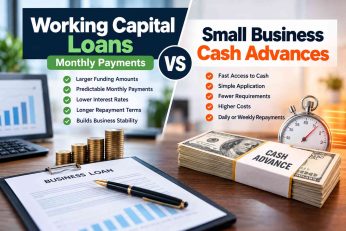
Working Capital Loans vs. Small Business Cash Advances

What if the financing used to fix a cash flow issue begins taking cash out even faster than customers pay? This is a concern when considering working capital issues. Taking out a small business working capital loan helps a business resolve issues either with cash flow for paying employees, buying more inventory to sell, buying more stock from the supplier, cash flow for cash repairs, cash flow for annual insurance payments, or cash flow for unexpected seasonal expenses. Taking out a Small business cash advance provides cash quickly, but there is an important difference. The financing plans that do not match the way cash actually moves in and out of the business become, in contrast, a barrier to solving the problem that the business may have initially assumed it could solve.


Working Capital Is About Timing, Not Just Profit

A profitable business can also run out of money. Some contractors may end up waiting 30 or 45 days to get paid for a job. Some retailers may need to buy inventory weeks prior to the product sales. Some restaurants may pay staff and buy food before the weekend rush.

That time gap is working capital. The Federal Reserve Banks’ 2026 Small Business Credit Survey stated that 60% of employer firms applied for financing in the 12 months leading up to the survey, and 56% of applicants sought financing to meet operating expenses.

The reason these numbers are important is that operational funding should improve the business’ working capital. If the business is going to lose money due to a cash outflow every day or every week, the owner should evaluate if the product actually fits the business’ operational cycle.

How Working-Capital Loans Can Be Structured

A term loan provides a lump sum that the business is required to repay with interest. A line of credit extends a business the ability to draw against the credit extended to them up to a credit limit, at which the business is obligated to repay the credit extended to them.

For a business that anticipates cash inflows and outflows within a month, scheduling payments on a working capital loan with monthly payments allows for a cash-flow forecast to be more manageable. Working capital loan payments may then be added to the employee payroll, rent, utilities, and other recurring bills.

Regarding recurring short-term cash flow gaps, owners must determine if they truly need to obtain new capital every time cash flows become tight. A line of credit, or even refinancing current obligations, may be structurally more appropriate for a short-term cash flow need that recurs on an annual basis.

Just because a loan structure lends itself to requirements that are short-term does not mean that it is a good financial decision. The total interest cost of a long-term loan can offset lower monthly costs. The financing structure must consider the true APR or annualized cost where available, total cost, and the cash flows of a business.

Why Cash Advances Can Feel Easy at First

A Small business cash advance provides money faster to business owners who otherwise cannot qualify for traditional funding. Cash advances focus on recent cash inflows, so the application may include fewer documents. Cash advance applications can move quickly.

The risks of cash advances include daily or weekly collections that may begin before the advance has generated income for the business. For example, cash is borrowed to buy inventory. That cash is advanced to buyer A, but buyer A has not sold the inventory to buyer B. In this case, the business may have solved its inventory problem, but it has created a payroll problem.

Just because a cash advance is risky, it does not mean they are bad. The risk to a business can be determined by examining how a cash advance will impact the business’s cash flow during regular business operations as well as irregularities such as slow periods, delays in payment collections, or sudden financial needs.

The Consolidation Question Many Owners Miss

Working capital pressure is worse with numerous short-term obligations. An owner may take several advances to cover inventory, payroll, and previous withdrawals. An advance at this point becomes more of a Band-Aid than a long-term solution.

Business working capital loans can be used in a consolidation strategy. Rather than taking another frequent advance, the owner can consider if eligible costly obligations can be refinanced into a long-term obligation with a monthly payment.

Money Man 4 Business caters to businesses that require working capital or consolidation. Its published programs state it offers a variety of terms with monthly payments ranging from 1 to 25 years. The firm states that qualified consolidation cases can save the customer two-thirds or more of the cost of high-interest debt being replaced. However, savings are dependent on the elements of the existing contracts and the new financing deal.

Stress-Test the Payment Before You Sign

When preparing for working-capital financing, make a conservative cash-flow forecast. This includes an average month, not your best month. Consider a worst-case scenario by forecasting a 10% to 15% drop in monthly sales, a big customer who takes an extra two weeks to pay, or a forecast for a broken piece of equipment.

Pose the realistic questions. Following the financing payment, does the company clear payroll? Can the company replenish inventory? Can the company fulfill orders to suppliers in a dependable manner? Does the company maintain a healthy account balance when a big customer takes the extra two weeks to pay?

A working capital loan with monthly payments means that you may have longer time between collections, but the amount still has to be workable. A cash advance may be fast, but the business must know exactly how the cash advance will help cover day-to-day expenses.

How Money Man 4 Business Helps With Cash Flow

Cash flow is at the heart of Money Man 4 Business’s coaching for business owners. Money Man 4 Business cares less about whether a business qualifies for financing, and more about whether financing can actually strengthen a business’ financial position. For that, they offer term loans, SBA financing, lines of credit, working-capital programs, and financing for debt consolidation.

In addition, Money Man 4 Business states clients have the option to work with a Chief Financial Officer with over 34 years of experience. This is often most valuable to business owners in a position where the business has multiple financing options in place. Instead of analyzing financing options one at a time, the owner can analyze the overall financing picture and determine which obligations are putting the most financial stress on the business.

In some instances, the most effective working capital solution is to simply add more working capital. At other times, it is a refinancing that reduces the outflow from the business each month.

Frequently Asked Questions

What can working-capital financing cover?

Depending on the product and lender, it may support payroll, inventory, supplier payments, seasonal expenses, marketing, repairs, or other eligible operating needs.

Are monthly working-capital payments always better?
Not necessarily. Monthly payments can be easier to budget, but rate, fees, term, total cost, and repayment capacity still matter.

Is a cash advance the only option for a business with urgent needs?
Not necessarily. Depending on qualification, a business may also consider term loans, lines of credit, SBA-backed options, equipment financing, invoice financing, or consolidation.

Fund the Operation Without Creating a New Emergency

Working capital enables a business to make payroll and buy inventory and supplies while managing cash flow for the day-to-day operating expenses. Bad working capital forces a business owner to worry about checking the bank balance each morning because they’re unsure if an ATM withdrawal will leave the account dry.

It is important to consider the amount of money available after a loan is paid off over the amount of money received at the time of funding for working capital loans. Cash advances for small businesses are quick and easy, but carry high costs. Money Man 4 Business reviews payment and consolidation options, particularly longer payment periods, with their clients. A financing package works best for a small business if the business can still meet its obligations if sales decline and customers pay invoices late.


Business Term Loans vs. Merchant Cash Advances

How much of your business income are you losing to high-interest financing? If this number makes you nervous, maybe it’s time to take a look at your terms. A small business term loan and Merchant cash advance both can add working capital to your business. However, term loans are structured as a principal and interest payment, whereas an advance is a single lump sum paid back over time. For owners who think about inventory and bills each and every day, it is not important how long your loan application takes. It is more important to know how much money will be left to your business after the payment.


When Fast Money Starts Controlling the Week

Funding that keeps pace with the speed of your business is critical when time is of the essence. A malfunctioning machine, a profitable buying opportunity, an outstanding receivable, or a costly surprise repair will not wait for a standard financing process. Because of this, MCA funding is often sought after. Funding decisions may rely heavily on recent deposits and income, and the funding process can start rapidly.

MCA funding appears to be a solution to your funding needs, but the products can erode cash rapidly. Many MCA funding agreements will cannibalize incoming cash by requiring daily or weekly withdrawals from a business checking account until the receivables have been collected. A business can appear to be profitable, but still run out of cash because withdrawals are greater than payments owed to staff and to outside vendors. One withdrawal can seem to be within reasonable constraints, but multiple withdrawals or funding back to back can lead to a cash flow crisis.

MCA funding can solve a business need for fast funding, but the high cost of funding can quickly eat up your profit.

What a Term Loan Changes

A business term loan lets a borrower know how much he or she can borrow over a given period to repay the loan. As most programs maintain a schedule of monthly payments, the borrower is aware of payment due dates. More important than pricing is control. A business owner can plan the cash flow of the business and compare the financing cost he or she will incur against the benefit of the cash flow.

The financing term is critical for the use of capital to buy equipment or inventory, renovate facilities, or expand a business. If the asset increases value over several years, financing the term of the asset over a longer period can be useful to keep the cash outflow limited.

Money Man 4 Business offers access to term loans between 1 and 25 years of financing, subject to underwriting and program availability. It gives more time between expected loan payments for the business owner than the daily or weekly collections.

Could Consolidation Be the Better Question?

Some owners already have multiple debt obligations when they reach the point of making the financing decision. Those can be a combination of MCAs, short-term ACH loans, credit card debt, and other high-cost debt. Taking another advance can result in an already busy week becoming busier with yet another obligation.

A more informative question is whether some or all of those debt obligations can be replaced with a longer-term, lower-payment consolidation. Money Man 4 Business advocates for MCA and other debt consolidations as a primary purpose of certain longer-term options. Higher cash flow is the goal of this approach.

Money Man 4 Business also states that a significant portion of consolidations that qualify substantially lower the interest and fees. In fact, savings of 2/3 or more are common when replacing high-cost debt with longer-term financing. The savings realized depend on the exact terms of the financing as well as fees. Therefore, all that matters is the comparison of actual savings to actual debt and financing, not the promotional wording.

Compare the Real Cost, Not Just the Quote

A term loan and a Merchant cash advance (MCA) have different features and should not be used interchangeably. A term loan has a stated interest rate, true APR where available, payment amount, and term. An MCA has a factor, a purchased amount, and a total payback amount. The factor should not be interpreted the same way as an APR.

Prior to agreeing to either of these, see what the net cash received will be, the total amount that will be repaid or provided, the payment frequency, the fees, the expected time to pay off the advance, the terms to pay off the advance, and what will happen if sales drop. After this, adjust the payment amount to see how it will impact your cash flow.

According to the Small Business Credit Survey conducted by the Federal Reserve Banks in 2026, 60% of employer firms applied for financing in the 12 months leading up to the survey, and 56% of applicants sought financing to meet operating expenses. This serves as a clear reminder that much financing is used for day-to-day operating needs. Any financing structure that will recreate the issue of cash flow should be carefully looked at.

How Money Man 4 Business Approaches the Problem

Money Man 4 Business has a unique approach for applicants. It does the legwork to match potential borrowers with the right business loan programs based on the reason for borrowing, the existing debt burden, and the cash flow. Money Man 4 Business’s long-term products are structured around business loans with monthly payments, with published programs that incorporate options for working capital, equipment financing, SBA financing, and MCA or debt-refinancing.

The company also provides CFO-level advisory support. Money Man 4 Business states that business owners work with a Chief Financial Officer who has 34+ years of helping business owners analyze financing and cash flow. This is important because a business that has multiple obligations may not just need another approval. Such a business may need someone to review the entire situation and determine what financing should be refinanced, what should remain unchanged, and what payment the business can afford.

Which Option Fits a Growing Business?

A Merchant cash advance is best when speed is required, and the cost vs return is clear. If a company’s owner understands that one cash advance means they will have to make several in return to collect, then cash advances are probably appropriate. The problem occurs when funds are withdrawn regularly, leaving the company without the cash to run their operation.

A business term loan makes sense when the company knows the purpose for the capital, and needs time for it to generate a return on the company’s investment. Businesses should look into this when they have multiple significant financial obligations that make it difficult for them to manage.

The best way to determine what kind of financing makes the most sense is to determine if the company can continue to pay staff, suppliers, and cover its obligations after a loan payment is made. If the financing doesn’t make that determination, then the financing amount, term, and especially the product need to change.

Frequently Asked Questions

Is an MCA the same as a business loan?
Generally, they are not the same. An MCA is commonly structured as a purchase of future receivables or revenue, while a term loan is debt repaid under a loan agreement. Legal treatment can vary by product and jurisdiction.

Are monthly payments always cheaper?
Not necessarily. Payment frequency and total cost are different issues. Monthly payments may be easier to budget, but owners still need to compare APR or annualized cost, fees, term length, and total payback.

Can existing MCAs be consolidated?
Yes, in some cases. Eligibility depends on the business, existing obligations, credit profile, revenue, and the refinancing program. Money Man 4 Business offers programs that may be used for MCA and other debt refinancing.

Choose Financing That Gives the Business Room to Breathe

Financing should help improve cash flow, not build cash flow hurdles. Compare the benefits of a business term loan to the costs of an MCA. Focus on the future costs of each funding option and how cash flow will be post-funding.

Money Man 4 Business offers credit programs, cash flow consolidation, and long term flexible payment options spanning 1-25 years. While weekly or daily cash advances may be necessary to fulfill obligations, consider if additional cash advances are the best alternative to your current obligation structure.

MCA Payoff Letters and Renewal Offers: What to Review

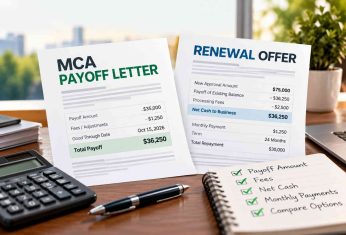
Do you know exactly what it costs to exit your current financing today? A payoff letter can answer that question. It should be read with the original agreement and any renewal offer. A new approval amount can easily draw the most attention. The more useful figures are the current payoff and fresh cash received. Also check the new repayment obligation and total replacement cost. Owners comparing an MCA renewal with small business loan monthly payments should start with the old financing. Know the exit cost before judging the appeal of the new offer. The exit number should come first because it affects every later comparison. Without it, the owner may overestimate how much new liquidity a renewal provides.


What a Payoff Letter Should Tell You

A payoff letter should make the current exit position clear. Formats vary, but several figures should be easy to identify. Check the payoff amount for a stated date. Review any fees, discounts, or conditions that affect the calculation. The effective date matters because collections may still continue. Compare the payoff with the remaining scheduled or expected collections. This shows the value of paying early. If refinancing is planned, give the new lender a current payoff figure. Do not rely on an old balance estimate. A current number helps prevent surprises at closing, especially with several obligations. If the payoff statement conflicts with the agreement, resolve the difference first. The letter can also be compared with the company’s accounting records. A material balance difference should be investigated before refinancing. Timing, fees, or payment recording can create differences. Unresolved errors can delay the closing process. Check the date again just before closing. A few more collections can change the payoff. That matters when the replacement amount is being sized closely.

Do Not Confuse a Payoff Discount With Cheap Financing

An early payoff discount can have value. It does not make the original financing cheap. Compare the cash originally received with payments already made. Then add the amount needed to exit today and any fees. A discount on the remaining balance does not rewrite the full cost. The same rule applies when comparing low-interest business loan monthly payments. A replacement loan may have a lower rate or smaller monthly payment. Total cost still depends on term, fees, amount financed, and time outstanding. Compare both short-term payment relief and total repayment. Also ask how the payoff funds must arrive. The letter may assume wire, ACH, or another method. Check whether any shortfall creates additional collections. Small operational details matter when one obligation closes and another begins the same day. The owner should also compare the cash received with the amount repaid over time. This keeps attention on total economics, not only the lower monthly figure.

How Renewal Offers Can Hide the Real Payoff

Renewal offers can contain several moving parts. A provider may show a new approval while deducting the old payoff. New fees or costs may also be taken from the proceeds. The fresh cash can therefore be much lower than the headline amount. Write down net proceeds before signing. Ask: How much is paying off the old obligation? How much will reach the operating account? What new total obligation will exist after closing? How often will payments be collected? Suppose the owner receives $40,000 in usable cash. If that creates a much larger repayment obligation, judge the deal on the $40,000 received. Do not judge it on the gross approval alone. A renewal should solve a defined business need. It should not simply restart the same payment cycle. Build a simple proceeds bridge: gross approval, minus payoff, minus fees, equals net cash. Put that figure beside the new total payback. The comparison shows what the business is actually buying with the new obligation. Net proceeds also show whether the new funding solves the stated need. If too little cash reaches operations, the renewal may not solve the original problem.

Compare an Exit With a New Monthly-Payment Structure

When refinancing is available, compare the old payoff with the proposed replacement. Put both on one page. Include net amount financed, fees, monthly payment, term, and total repayment. Also note security, guarantees, and prepayment terms. Small business loan monthly payments may be easier to plan than frequent collections. Still, a lower payment does not always mean a lower total cost. A longer term can reduce monthly pressure while increasing total interest. Choose a payment the business can handle in a weak month. The term should not extend debt longer than necessary. A stronger replacement improves cash flow without hiding the cost of relief. Also compare the bank balance after the payment, not only the payment itself. A lower monthly amount may still be too high when reserves are already thin. Compare several term options when possible. A slightly higher monthly payment may save meaningful total interest while still leaving enough cash for normal operations.

MM4B’s Payoff-First Approach

Money Man 4 Business can begin with the current payoff and work forward. MM4B compares what must be paid today with available refinancing or consolidation terms. The review can include payment, term, and true cost. Where the business qualifies, a monthly-payment structure may improve cash-flow predictability. For eligible high-cost debt, the company states that some qualifying consolidations may reduce interest and fees by two-thirds or more. Results depend on underwriting and the debts being replaced. Clients can also work with a CFO with 34+ years of experience. That review can cover payoff figures, net proceeds, and cash-flow projections. A payoff-first approach can also limit unnecessary overborrowing. Once the old debt and actual cash need are clear, the new amount can be sized properly. Borrowing much more than needed may raise both the monthly payment and total cost. This approach also helps avoid borrowing simply because more money is offered. The new amount should match the payoff and the actual business need.


Frequently Asked Questions

Can an MCA have an early payoff discount?

Some agreements may provide discounts or other early payoff terms, while others may not. Review the actual contract and current payoff statement rather than assuming a discount is available.

What should I request before refinancing?

Ask for a current payoff amount, the relevant agreement, a record of payments, and any information needed to confirm fees or payoff conditions. The replacement lender may request additional financial documents.

Why is net funding important in a renewal?

Because the headline approval may include money used to satisfy the old balance. Net funding shows how much fresh cash actually reaches the business after deductions.

Know the Exit Number Before You Look at the Next Approval

A payoff letter turns a broad financing problem into a clear number. Use that number to compare renewal proceeds with monthly-payment refinancing. Keep payoff, true cost, and qualifying consolidation options on the same page. Money Man 4 Business can help owners make that comparison. Before closing, confirm that the payoff figure is current for the funding date. Also confirm exactly how the old obligation will be satisfied. A clean exit reduces the risk of a leftover balance or continued withdrawal. That prevents old payments from competing with the new monthly obligation. Save the final payoff confirmation with the new loan documents. Clear records make it easier to verify that the old financing has fully ended. It also helps to confirm whether any balance will remain after funding. Even a small leftover obligation can keep collecting and reduce the expected cash-flow relief.

Refinance an MCA Before You Renew? What to Compare

If an MCA provider offers more cash before the first advance is paid off, is that relief or a warning? A merchant cash advance for small business can solve a real short-term need. A renewal offer, however, deserves a separate review. The headline may show a larger approval. The business may receive much less fresh cash after the old payoff is deducted. New fees may also apply, and a new collection schedule may begin. That can restart the same payment cycle. Before renewing what many owners call an mca loan, compare three things. Check what you owe today, what cash you will actually receive, and the next 90 days of cash flow. A bigger approval can still leave the company with very little usable cash. That is why the net amount matters more than the headline figure.


Why Renewal Offers Arrive Before Payoff

Renewal offers can feel convenient because the business already knows the provider. They may also arrive while the company is still under pressure. If sales remain steady and collections are made, more capital may be offered early. That can feel like a reward for good performance. The key question is simpler: how much of the offer is truly new money? A larger approval may first have to satisfy the old payoff. The owner can then sign a new agreement and pay new financing costs. Yet the fresh cash received may be much smaller than expected. Treat a renewal as two transactions. One closes the current obligation, and the other creates a new one. A renewal efficiency ratio can make this clearer. Divide fresh cash received by the total new obligation created. A weak ratio may show that much of the cost is rolling old debt. That does not make the renewal automatically wrong. It does make the trade-off easier to see. Write the calculation down before signing. Seeing fresh cash beside the new total obligation makes the cost of rolling the old balance much easier to understand.

Calculate the Real Payoff Position

Ask for a current payoff figure before comparing any renewal. Confirm the amount needed to end the existing obligation on a specific date. Check whether discounts, fees, or other early-payoff conditions apply. Then calculate net new money. Start with the new proceeds and subtract the old payoff. Also subtract new fees and any other deductions. This number is often more useful than the advertised approval. Next, compare the current weekly cash burden with the new collection schedule. A deal may provide only modest fresh working capital. If it also restarts an aggressive payment cycle, the added liquidity may be expensive. Base the decision on cash actually received and cash that will leave afterward. Keep the payoff statement and renewal proposal together, with dates. Collections can continue while an owner compares figures from different days. That can distort the result. A same-day comparison gives a clearer view of debt retired and new capital received. Also confirm how quickly the old provider will stop collecting. A payoff that is correct today may change if another debit posts before the transaction closes.

Renewal Versus Refinance

A renewal usually continues the same type of financing relationship. A refinance has a different purpose. It replaces an existing obligation with another structure. The new structure may change payment frequency, term, or cost. Refinancing is not automatically the better choice. It still requires underwriting and may include fees, collateral, or guarantees. The useful question is whether it creates a healthier cash-flow pattern. A monthly payment may give the business more time to collect invoices. It may also fit payroll planning better than daily or weekly collections. Compare total payback, annualized cost where available, and monthly payment. Also compare the cash left after each payment. Refinance only when the new structure improves the financial position. It should not simply move the same pressure to another lender. Plan the transition as well. Ask how the old payoff will be sent and when collections stop. Confirm what evidence shows the old obligation has been fully satisfied. Temporary overlap can also matter. If old collections continue while the new payment begins, the account may face pressure during the transition even when refinancing is sound.

Test the Next 90 Days of Cash Flow

Before renewing or refinancing, build a 90-day cash-flow forecast. Put payroll, rent, taxes, vendor payments, and expected receipts on one calendar. Add all loan or financing obligations. Then run two versions of the forecast. Use the renewal in one and the proposed refinance in the other. Include a weak-sales month or a delayed receivable. This is often where the real difference appears. A payment can look manageable while revenue is strong. It can become risky when a large customer pays two weeks late. The business should survive the new payment without needing another advance. If either option leaves payroll short, change the plan. The business may need to borrow less, adjust the term, or reconsider financing. Also show the intended use of the fresh funds. If the money buys inventory, show when that inventory should sell. If it bridges a receivable, show the expected collection date. Financing is safer when repayment connects to a defined business event. Keep the forecast practical. Use expected deposits, not optimistic sales targets. The purpose is to see whether the business can carry the payment through ordinary delays.

How Money Man 4 Business Evaluates the Exit

Money Man 4 Business focuses on exiting high-cost financing, not simply replacing it. MM4B can compare the current payoff with net new money in a renewal. It can also review total payment burden and monthly cash-flow impact. In qualifying cases, a longer repayment structure may reduce operating-account pressure. The company states that eligible consolidation can sometimes reduce interest and fees by two-thirds or more. Savings depend on the exact obligations and the new financing terms. Clients can also work with a CFO with 34+ years of experience. That review can help determine whether the business needs new capital, refinancing, or better debt planning. Refinancing should not become a reason to borrow the maximum available. A smaller amount may create a safer payment when the business has a defined need. The goal is to improve cash flow and the balance sheet, not simply increase proceeds. Compare the new monthly obligation with the cash the business needs to keep. A refinance that leaves almost no reserve may still create another short-term problem.


Frequently Asked Questions

Does refinancing an MCA erase the balance?

No. Refinancing normally uses new financing to pay an existing obligation. The debt is replaced, not magically eliminated, and the new loan creates its own repayment responsibility.

What is net new money in a renewal?

It is the cash the business actually receives after the old payoff and any applicable fees or deductions are taken from the new approval amount.

Should I refinance before the MCA is fully paid?

Sometimes, if the replacement structure meaningfully improves cash flow or total cost and the business qualifies. Compare the current payoff and the complete new terms before deciding.

Do Not Confuse a Bigger Approval With More Breathing Room

The key question is not whether another offer exists. It is whether the next financing decision leaves the business stronger. Compare the payoff, net proceeds, payment frequency, and true cost. Then test the choice with a realistic 90-day cash-flow forecast. Money Man 4 Business can help owners compare renewal, refinance, and qualifying consolidation options. The focus should stay on monthly cash flow and the amount left for normal operations.

Choosing the Right Business Debt Consolidation Term

Can a lower monthly payment become too expensive if you stretch the debt too long? That is the main trade-off in choosing a consolidation term. Business term loan monthly payments can provide immediate cash-flow relief. They do this by spreading repayment across more time. Longer terms, however, usually mean interest is paid for longer. The best term is not automatically the longest one available. It should give the business enough room to recover. It should also reduce debt at a sensible pace. Compare monthly relief, total cost, and a business loan amortization schedule before deciding. The decision should therefore look beyond the first monthly payment. A lower payment can feel helpful while the longer repayment period quietly increases total cost.


Payment Relief Versus Total Cost

A longer term can reduce the scheduled monthly payment. The principal is simply repaid over more periods. That may help a business replacing several high-frequency obligations. It can create room for payroll, vendors, taxes, and inventory. The trade-off is higher total interest when debt remains outstanding longer. Ask two separate questions: What payment can the business safely handle? What total cost is reasonable for that relief? Suppose a five-year structure is affordable. If ten years saves only a small amount each month, the extra term may not help much. A very short term can create the opposite problem. It may bring back the same cash pressure consolidation was meant to solve. Compare the added interest with each step down in monthly payment. If years are added for little relief, the trade-off may be weak. If the lower payment creates real operating room, it may make more sense. The owner should compare the options with actual cash-flow needs. A small payment reduction may not justify several extra years of interest and debt exposure.

Match the Term to the Business Recovery Period

Think about what the business must accomplish after consolidation. Does it need six months to rebuild reserves? Does it need a year to restore vendor terms? Does a major contract or difficult expansion require two years? The repayment term should support that recovery period. A company coming from expensive short-term debt may need breathing room first. It may need to stop overdrafts, catch up taxes, and rebuild supplier trust. Once those issues improve, the owner may want to reduce principal faster. That makes prepayment terms important. A good consolidation should be manageable today and flexible later. The recovery period should also reflect seasonality. A company entering a slow season may need more room. One approaching its strongest months may need less. A term that looks affordable on average can still create pressure at predictable points in the year. Ask when management expects the main cash-flow problems to be resolved. That date can help define how much payment relief is truly needed.

Use an Amortization Schedule to Compare Options

A business loan amortization schedule shows how each payment is divided. It separates principal from interest and tracks the balance over time. Compare several terms side by side instead of looking only at the monthly payment. Note total interest and the balance after one year. Also check the balance after two or three years. This shows the cost of stretching the debt. It also helps if the owner may refinance or prepay later. The schedule is not a forecast of business performance. It is a map of the loan’s repayment path. Pair it with a cash-flow forecast. Then the owner can see both sides of the decision. One side is the cash kept each month. The other is how quickly debt actually falls. Pay special attention to the balance at the expected recovery point. That figure shows how much debt remains after the business is stable again. Also review any fees or prepayment terms beside the schedule. The balance path matters more when the owner expects to pay faster after recovery.

Set a Payment the Business Can Survive in a Weak Month

Test the consolidation payment against a weak month. Do not use the best recent results. Reduce sales, delay a large customer payment, and add a normal surprise. An equipment repair or higher supplier bill may be enough. Then ask whether payroll, taxes, rent, and debt can still be paid. If not, the term may be too short. The new financing amount may also be too large. This test matters most when consolidation is meant to stop reborrowing. The business should have room for normal volatility after closing. It should not depend on every customer paying on time. The stress test can also guide the reserve kept at closing. Using every dollar to reduce debt may leave the business exposed. A modest cash cushion can sometimes be more useful than pushing the new payment to the absolute minimum. Use a realistic reserve target in the test as well. The business should not pass only because the bank account is allowed to fall almost to zero.

MM4B’s 1–25 Year Range as a Planning Tool

Money Man 4 Business advertises financing terms from 1 to 25 years. Availability depends on the product, underwriting, and other conditions. The value of that range is flexibility for comparison. It does not mean every owner should choose the longest term. MM4B can compare structures with different payments and recovery periods. Clients can also work with a CFO with 34+ years of experience. That review can cover cash flow, existing debt, and the amortization path. For qualifying high-cost obligations, MM4B states that some eligible consolidations may reduce interest and fees by two-thirds or more. Results still depend on the old debt and the new terms. If several term options are available, compare three things. Look at monthly payment, total cost, and prepayment flexibility. The best choice is often between the shortest and longest option. It should protect current cash flow while keeping a reasonable path toward payoff. Term selection should also consider seasonality and future flexibility. A middle option may protect current cash without leaving the company in debt for unnecessary years.


Frequently Asked Questions

Is the longest consolidation term always best?

No. A longer term can reduce the monthly payment but may increase total interest. The best term balances affordable monthly cash flow with a reasonable total repayment period.

Can I prepay a consolidation loan?

That depends on the loan agreement. Review any prepayment terms or penalties before closing, especially if you expect cash flow to improve and want to reduce debt faster.

How should I compare total cost with monthly relief?

Look at both the monthly payment and total repayment. Then compare how much operating cash the business keeps under each option and how quickly principal declines.

The Best Term Is the One That Gives the Business Room to Recover

A smaller payment helps only when the cost still makes sense. Compare several terms and review the amortization schedule. Then stress-test the payment against a weak month. Money Man 4 Business can help owners compare consolidation structures on that basis. The term should support cash-flow recovery without extending debt longer than needed. Revisit the decision after the business stabilizes. If cash flow improves and prepayment is economical, principal may be reduced faster. A manageable term today does not prevent a shorter actual payoff later. Keep the amortization schedule after closing and compare it with actual progress. That makes it easier to decide whether faster principal reduction is affordable later. That review should still use the same weak-month cash test. Faster repayment only makes sense when the business can reduce principal without rebuilding the reserve gap or creating another short-term funding need.

Business Debt Consolidation Roadmap for High-Cost Obligations

If four lenders are taking money from one account, should the next financing decision be another lender or one restructuring plan? Business debt consolidation starts by viewing every obligation together. Credit cards, MCAs, ACH products, and equipment debt may look different. They still compete for the same operating cash. Monthly payment business financing may replace several frequent obligations with one predictable structure. That depends on qualification and the available program. Consolidation does not make debt disappear. The owner should know what is being replaced and what the new loan costs. The more important question is whether the business keeps more usable cash afterward. Each obligation may look manageable by itself. The problem appears when every payment is placed against the same payroll, tax, and vendor calendar.


Inventory Every Obligation First

Do not begin with the size of the new loan. Begin with a complete debt inventory. List every lender or provider and the current balance. Add the payoff amount, payment amount, frequency, and estimated remaining term. Also record interest or factor information, fees, collateral, liens, guarantees, and prepayment terms. If a payoff changes daily, note the date. Then calculate how much cash all obligations remove each month. This schedule becomes the baseline for the consolidation review. Without it, a lower payment can look better than it really is. Some debts may remain outside the refinance. New fees may also change the economics. Compare the proposed consolidation with the entire debt stack. Do not compare it with only one selected obligation. The inventory should also show personal guarantees and secured assets. Those details can affect refinancing order and lender security requirements. The inventory should be updated again before closing. Daily collections can change payoff figures, and a stale schedule may leave the replacement amount too high or too low.

Identify Which Debts Create the Most Pressure

The largest balance is not always the biggest source of pressure. A smaller obligation may collect far more often. That can hurt operations more than a larger monthly loan. Rank each debt by cash-flow burden, true cost, and strategic importance. Cash-flow burden looks at how much leaves the account and how often. Cost includes interest, fees, factor pricing, and total repayment. Strategic importance asks whether the debt supports an essential asset or relationship. This ranking helps show which obligations deserve attention first. It may also show that not every debt needs consolidation. Keep financing that is reasonably priced and well matched to the business. Focus on obligations that create the greatest stress. A simple score can help. Rate payment frequency, effective cost, remaining term, and operational risk. The method does not need to be complicated. It simply separates inconvenient debt from debt that is actively damaging cash flow. This ranking can also guide the order of payoffs. Debt tied to critical equipment or an important banking relationship may need different treatment from unsecured short-term debt.

What Consolidation Can and Cannot Do

Consolidation can simplify payment schedules and may improve cash flow. It often does this by spreading repayment over a more manageable term. One scheduled payment can also make budgeting easier. Still, consolidation cannot erase principal or fix an unprofitable business model. It also cannot guarantee savings. A small business term loan used for consolidation still carries a cost. A longer term may lower the monthly payment while increasing total interest. Compare total payback before and after refinancing. Do not judge the deal only by the first month’s relief. Also review liens, guarantees, and payoff conditions. A stronger consolidation creates a sustainable payment and a clearer debt-reduction path. It should not simply delay the same problem. The business also needs a plan to avoid rebuilding old balances. If paid-off cards or revolving facilities are used again immediately, the debt stack can return quickly. Owners should also decide what happens to paid-off revolving accounts. Leaving them available without clear rules can make it easy to rebuild the same balances later.

Choose the Replacement Structure Carefully

Place the proposed replacement loan beside the current debt schedule. Compare net proceeds, payoffs, fees, payment, term, and total repayment. Also review the rate or true APR, collateral, guarantees, and prepayment terms. Then stress-test the payment during a weak month. Can the business cover the new payment, payroll, taxes, and vendors? Can it still keep a reasonable cash buffer? If yes, the structure may be healthier. If almost no operating cash remains, changing payment frequency is not enough. The amount borrowed or the term may need to change. Consolidation should create clear breathing room. It should not stretch debt beyond the business recovery plan. The closing date also matters. Payoff figures may change while daily or weekly collections continue. Use current numbers and a clear payoff process. Good coordination lowers the risk of leaving a small balance behind. The comparison should show the bank balance after the proposed payment. A lower payment is useful only when enough cash remains for normal business volatility.

How Money Man 4 Business Handles Qualifying Consolidation

Money Man 4 Business focuses on consolidation and cash-flow improvement. MM4B can review current payoffs and payment frequency. It can then compare available monthly-payment structures. Depending on the product, underwriting, and availability, advertised terms may range from 1 to 25 years. That range is a planning tool, not a promise of the longest term. MM4B also states that qualifying consolidation of eligible high-cost debt may reduce interest and fees by two-thirds or more. Actual savings depend on the debts replaced and the new terms. Clients can work with a CFO with 34+ years of experience. That review can help decide whether the business needs consolidation, new capital, or both. After closing, compare the first three to six months with the original projections. If reserves are not rebuilding or overdrafts continue, management should adjust operations before borrowing again. The first months after closing should be treated as a test period. Compare actual cash flow with the forecast and address any gap before taking on more debt.


Frequently Asked Questions

Can MCAs, cards, and short-term loans be consolidated together?

Sometimes. The debts that can be included depend on the refinancing product, payoff requirements, liens, underwriting, and the business profile. Each obligation should be reviewed individually.

Does consolidation hurt cash flow at first?

Closing costs or payoff requirements can affect the transaction, but the purpose of a well-structured consolidation is usually to improve the ongoing cash-flow burden. Compare the complete before-and-after picture.

Are savings guaranteed?

No. Savings depend on existing costs, payoff amounts, the new rate, fees, and term. Any savings claim should be verified with an apples-to-apples comparison of the current obligations and the proposed financing.

Consolidation Works Best When Every Debt Is on the Same Page

Start with visibility. Put balances, payoffs, payment frequency, true cost, and cash-flow burden together. Only then compare monthly-payment refinancing. Money Man 4 Business can help owners review qualifying consolidation options. The structure should leave more operating cash while keeping total cost clear. End the process with a written post-closing plan. Record which debts are gone, which remain, and the new monthly obligation. Also set a reserve target. This makes the refinance more likely to become a real reset, not the start of another debt stack. The written plan should also state how the monthly savings will be used. Reserves, taxes, and overdue vendor balances often need attention before new expansion.

Financing a Partner Buyout Without Draining Cash Flow

Why finance a five-year build-out with money that demands repayment before the new location is fully open? Leasehold improvements can create a useful space. They can also absorb cash quickly. Commercial financing may help pay for construction, fixtures, technology, and other eligible project costs. The financing still needs to match the lease and the expected benefit period. Before borrowing, build the full renovation budget. Then test the monthly payment against the cash flow the location is likely to produce after opening. Commercial loan rates matter, but the project timeline matters too. Commercial business loans should be compared using the same build-out budget.


Build the Complete Renovation Budget

Start with the contractor estimate, but do not stop there. A build-out can include design fees, permits, inspections, fixtures, signage, technology, furniture, and utility work. The business may also lose sales during construction. Add moving and reopening costs when they apply. Keep a contingency for unexpected conditions behind walls or under floors. Then separate required work from optional upgrades. That helps if the project becomes more expensive. A clear budget also improves the financing discussion. The lender can see what the money will fund. The owner can see how much cash must be kept outside the project.

Review the lease before finalizing the construction plan. Some leases restrict signage, structural changes, or mechanical work. Others require landlord approval for contractors. A financing plan built before the lease is understood can fund improvements that are not allowed. The lease and the project budget should be reviewed together.

Ask the landlord to confirm approval requirements in writing. This reduces the risk of paying for plans that later need major changes.

Understand Landlord Contributions

Some leases include a tenant-improvement allowance. The landlord may pay or reimburse part of the build-out. Read the lease carefully. The allowance may only cover certain costs. It may also be paid after work is complete. That means the tenant could still need cash during construction. Ask when reimbursements occur and what documents are required. Also check whether unused allowance funds disappear. A landlord contribution can reduce the amount of commercial financing needed. It does not replace a cash-flow plan. The business still needs money for costs outside the allowance and for normal operations before the new space starts producing revenue.

Timing matters because rent may start before the business opens. Free-rent periods can help, but they eventually end. Add rent during construction to the cash-flow model if it applies. Also consider delays in permits or inspections. The business should not depend on an exact opening date to make the financing work.

Build permit delays into the schedule. One extra month of rent and payroll can matter more than a small construction change order.

Match the Financing Term to the Benefit Period

The improvements only create value while the business can use the space. Compare the loan term with the remaining lease term and renewal options. Also consider the useful life of the improvements. A long loan may lower the monthly payment, but it can outlast the lease. A short loan may create a payment that is too high during ramp-up. Use a commercial loan calculator to test several terms and rates. Then add the payment to the location’s projected cash flow. The right term should balance affordability with the period the improvements are expected to benefit the business. Use a commercial loan calculator with more than one rate and term. This makes commercial loan rates easier to compare.

Use the calculator for more than one case. Test a base budget, a 10% overrun, and a delayed opening. Then compare the monthly payment with projected sales. This shows whether the company has enough cushion. A project that only works at the original budget may be too fragile for normal construction risk.

A calculator is most useful when the inputs are realistic. Use a range of rates and project costs, not one perfect estimate.

Plan for Overruns Before Construction Starts

Most projects change. A permit can take longer. Materials can cost more. Electrical work may expand. Set a contingency before construction begins. Also decide which upgrades can be delayed if costs rise. Keep a list of must-have items and nice-to-have items. This prevents last-minute borrowing at expensive terms. Update the budget whenever a change order is approved. Do not wait until the project is nearly finished. A small overrun can be manageable. Several untracked overruns can create a working-capital problem before the doors open.

Keep change orders controlled. Every change should show the added cost and any effect on timing. Small upgrades can feel harmless during construction. Together, they can consume the contingency. Require a simple approval process even for owner-requested changes. This keeps the project aligned with the financing plan.

Require every change order to show both cost and timing. A cheaper change can still be expensive if it delays opening by several weeks.

How Money Man 4 Business Helps Compare Commercial Financing Structures

Money Man 4 Business can help owners compare commercial financing with the lease economics in mind. MM4B can review project cost, monthly payments, lease term, and post-opening cash flow. Clients may work with a CFO with 34+ years of experience. That can help when the build-out competes with payroll, inventory, and other expansion costs. The right structure may be a term loan, SBA option, or another commercial program, subject to eligibility and underwriting. The aim is to finish the space without leaving the business short on operating cash. Commercial business loans can differ in fees, collateral, and repayment flexibility. Commercial financing should be tested against the opening schedule.

After opening, track whether the improvements produce the expected benefit. Better layout may increase capacity. New fixtures may improve customer experience. Technology may reduce labor. Compare actual results with the original case. That information helps the owner judge whether future renovations should use similar financing or a different approach.

Measure results after opening. If the improvements do not create the expected benefit, that lesson should shape the next expansion project.

Before signing the financing, compare the build-out budget with the lease calendar. Mark rent commencement, expected opening, contractor milestones, and loan payments on one timeline. This shows where cash pressure may overlap. It also makes delays easier to price before they happen, which is useful when deciding how much contingency to keep. Share the timeline with the contractor and finance team. A common schedule makes it easier to spot when a construction delay will create an extra month of rent, payroll, or loan costs.


Frequently Asked Questions

Can a business loan finance tenant improvements?

Yes, depending on the lender, loan program, lease, and project. The lender will need to confirm which costs are eligible.

Should the loan term be longer than the lease?

That can create risk. The financing term should be considered alongside the lease term, renewal options, and useful life of the improvements.

How much contingency should a build-out budget include?

There is no universal amount. The right cushion depends on project complexity, contractor pricing, and how much uncertainty remains.

Build the Space Without Emptying the Operating Account

A renovation should help the business earn more, serve customers better, or support growth. It should not create a cash shortage before opening. Build the full project budget, understand landlord contributions, and test several payment structures. Money Man 4 Business can help owners compare commercial financing and monthly cash-flow effects. The right plan pays for the space while leaving enough cash to operate inside it. A commercial loan calculator is most useful when the budget includes overruns and delays.